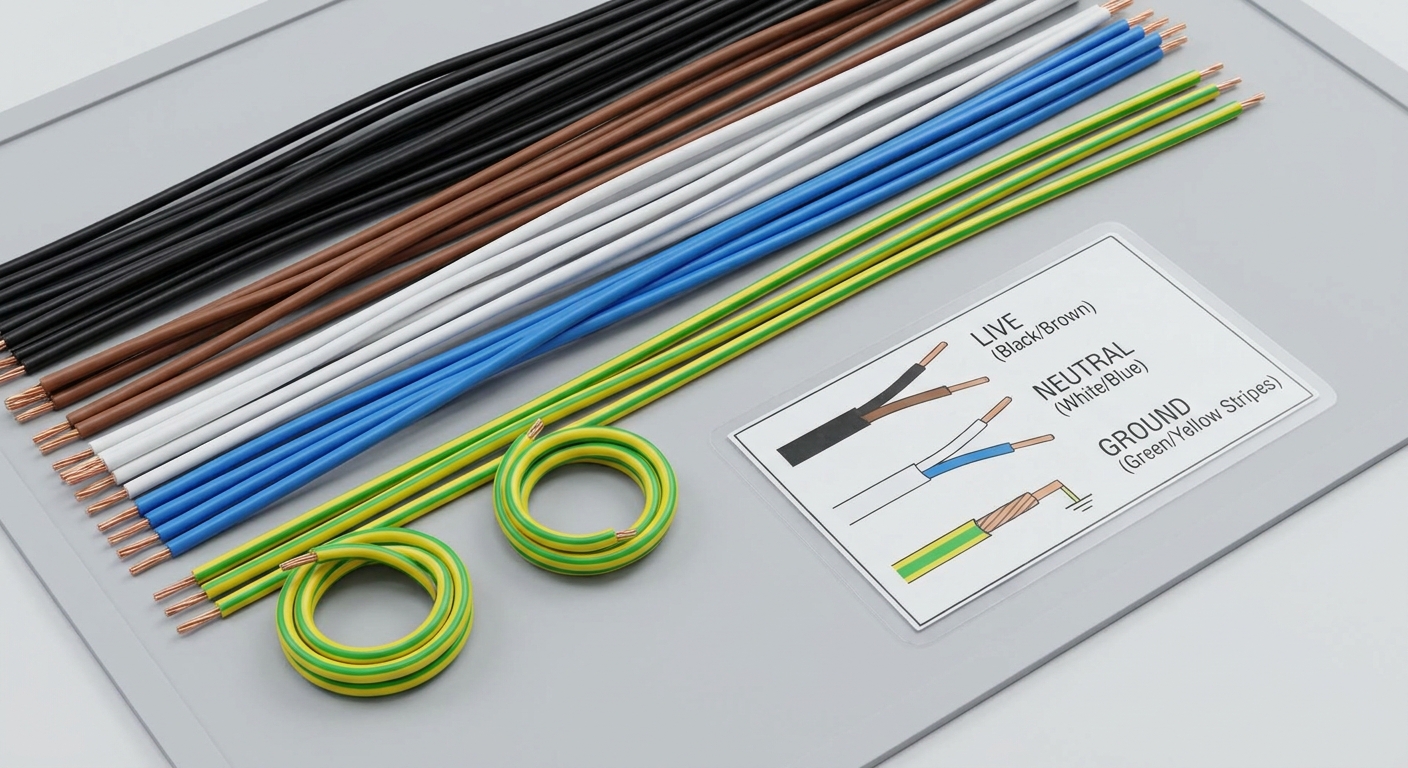
Understanding Standard Earth and Ground Wire Color Codes for PCs
In the world of electrical wiring, knowing the correct color codes for wires is crucial. The precise identification of wires ensures safety and functionality in electrical systems, particularly in computers and other electronic devices. This article aims to clarify the standard earth and ground wire color codes utilized for PCs, addressing a fundamental question: What are the accepted color codes for grounding, neutral, and live wires, and how do they apply to personal computing? Understanding these codes is essential for both hobbyists and professionals, as improper wiring can lead to malfunctions or even hazards like electrical shocks or short circuits. A common misconception is that wire colors can vary significantly; however, standardized codes exist globally to maintain consistency. In this article, readers will gain insights into the relevant color codes based on locations and standards, their applications, and best practices for installation.
Overview of Wire Color Codes
Wire color codes represent a universal standard aimed at aiding in the identification of electrical wires and ensuring safety during installation and maintenance. The codes differ slightly between regions but generally follow specific patterns based on international and national standards, such as the NEC (National Electrical Code) in the United States and the IEC (International Electrotechnical Commission) for international standards.
Key Functional Categories
The primary functions that wire color codes signify are:
- Live (Phase) Wires: These wires carry electrical current to the device.
- Neutral Wires: They provide a path for current to return after passing through an appliance.
- Ground (Earth) Wires: These are safety wires that facilitate the safe discharge of electricity in case of a fault.
Common Color Codes
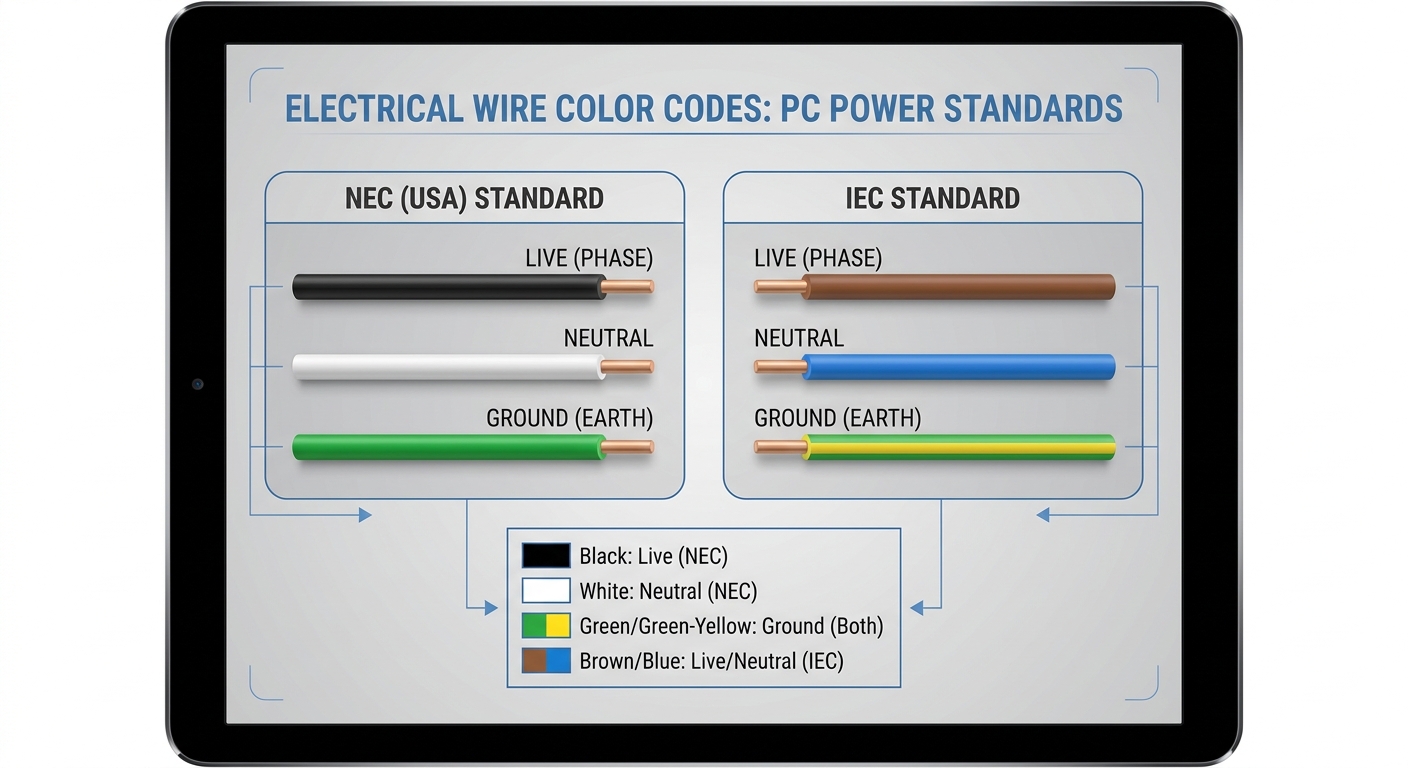
Here’s a concise chart summarizing the wire color codes used across different standards:
You may also like



| Region | Live (Phase) | Neutral | Ground (Earth) |
|---|---|---|---|
| NEC (USA) | Black | White or Gray | Green or Bare |
| IEC | Brown, Black, or Gray | Blue | Green/Yellow Stripes |
| Three-Phase (US) | Black, Red, Blue | White | Green or Bare |
| Three-Phase (IEC) | Brown, Black, Gray | Blue | Yellow-Green |
Specific Color Codes for Ground and Earth Wires
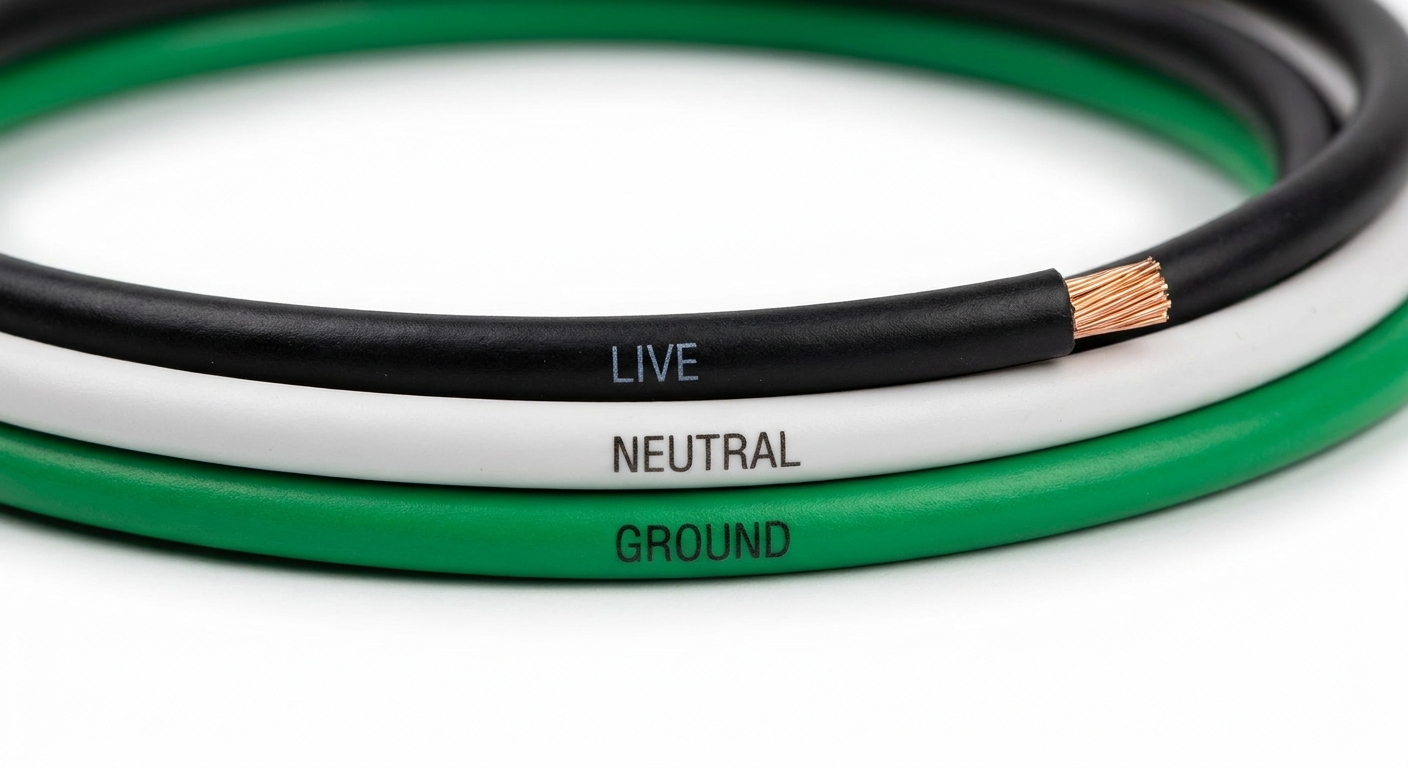
The ground or earth wire’s primary role is to provide a safe path for electricity in case of electrical faults, preventing electric shock or fire hazards. Understanding the specific color codes for ground wires is vital for anyone involved in electrical tasks, especially in building or maintaining PCs.
Ground Wire Standards
- The ground wire is most commonly colored green or bare in the United States.
- In the IEC standards, the ground wire is typically marked with a green and yellow striped pattern.
Implementation in Personal Computing
When installing or repairing computers, adhering to these wire color codes is essential. Here’s how to ensure it’s done correctly:
- Identify the Wires: Use the color codes to determine the function of each wire in the electrical setup.
- Connect Correctly: Match the live wire to the phase input, the neutral wire to the return path, and the ground wire to the safety point.
- Test the Connections: Always test connections with a multimeter to ensure there are no discrepancies.
Safety Practices
Employing correct wiring ethics is critical not only for device performance but also for user safety. Key recommendations include:
- Always turn off power before touching any wiring.
- Use wire insulation that conforms to appropriate standards.
- In case of uncertainty, consult an electrician or a qualified professional.
Wire Color Codes Around the World
Globally, while there are variations, adherences to specific wire color codes streamline international electrical standards. Differences mainly arise in the application, frequency, and phases of electric systems used in each region. For example, while black may signify a live wire in the U.S., other regions use colors like brown.
Examples of Global Standards
| Standard | Description |
|---|---|
| NEC (USA) | Defined by the National Electrical Code, focusing primarily on safe wiring. |
| IEC | Aims for consistency and safety across global standards, widely adopted in Europe and other regions. |
FAQs
Q1: What is the color code for the ground wire?
A1: Most standards designate the ground wire as green/yellow striped for IEC and green or bare for NEC.
Q2: Are there differences in color codes globally?
A2: Yes, while general principles are similar, specific codes can vary between regions (e.g., NEC in the US vs. IEC globally).
Q3: What happens if I connect wires incorrectly?
A3: Incorrect connections can lead to malfunctions, device damage, or fire hazards.
Q4: How can I tell if a wire is live?
A4: Use a multimeter or voltage tester to assess wire function, ensuring safety before handling.
Q5: Where can I find manufacturer support for wiring issues?
A5: You can often find support through specific manufacturer websites. For example, hardware manufacturers typically offer wiring guides.
Conclusion
Understanding wire color codes, particularly for ground and earth connections, is essential for safe and effective electrical work in personal computing and beyond. By adhering to these codes, both professionals and DIY enthusiasts can ensure not just the functionality but also the safety of their electrical systems. Related topics worth exploring include the fundamentals of electrical safety and best wiring practices in residential and commercial settings.
Rotating USB