Introduction
The advancement of quantum computing has brought forth a compelling debate within the tech community regarding the design architectures of quantum chips. A recent focal point of this discussion is Google’s Willow quantum processor, which utilizes a two-dimensional (2D) grid layout compared to other potential three-dimensional (3D) designs. This article aims to dissect the advantages and disadvantages of these layouts and how they impact the performance and scalability of quantum computing systems. Understanding these differences is crucial as the quest for practical, fault-tolerant quantum computers continues to evolve. One common misconception is that 3D designs inherently outperform 2D layouts; however, Willow’s design challenges this notion by showcasing significant efficiencies and advancements in error correction. Readers will discover how the choice between 2D and 3D designs affects quantum computing capabilities, setting the stage for future innovations.
The Willow Quantum Processor: An Overview
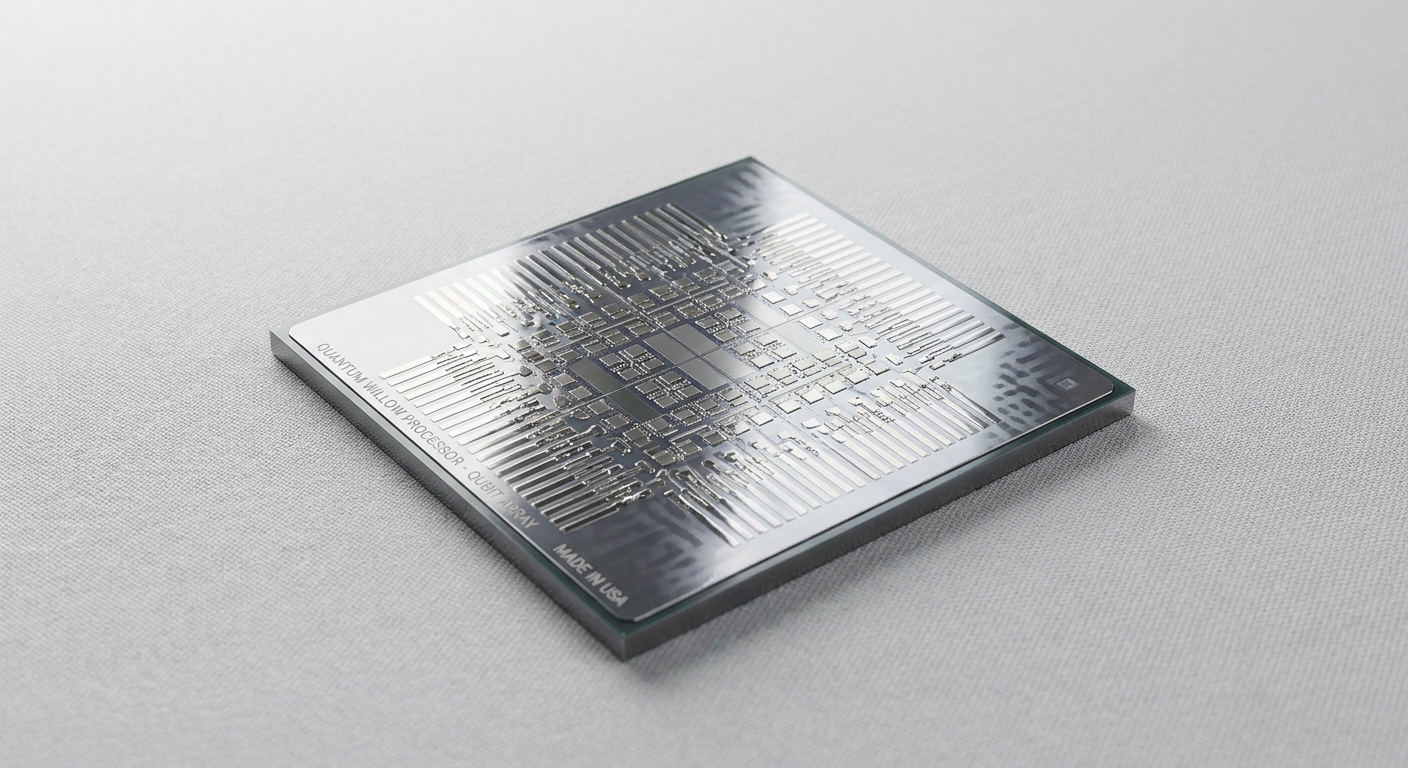
Google’s Willow chip represents a significant step forward in superconducting quantum computing technology. As the successor to the Sycamore processor, Willow is designed to enable scalable, fault-tolerant quantum computation. Its architecture, grounded in a two-dimensional grid layout, is tailored for the specific demands of superconducting qubits, facilitating local-check measurements critical for error correction.
Two-Dimensional Grid Layout Explained
The 2D grid layout of Willow allows for efficient connectivity between qubits. Each qubit can directly communicate with its nearest neighbors, leading to shorter interaction times and reduced overall operational complexity. Key characteristics of this layout include:
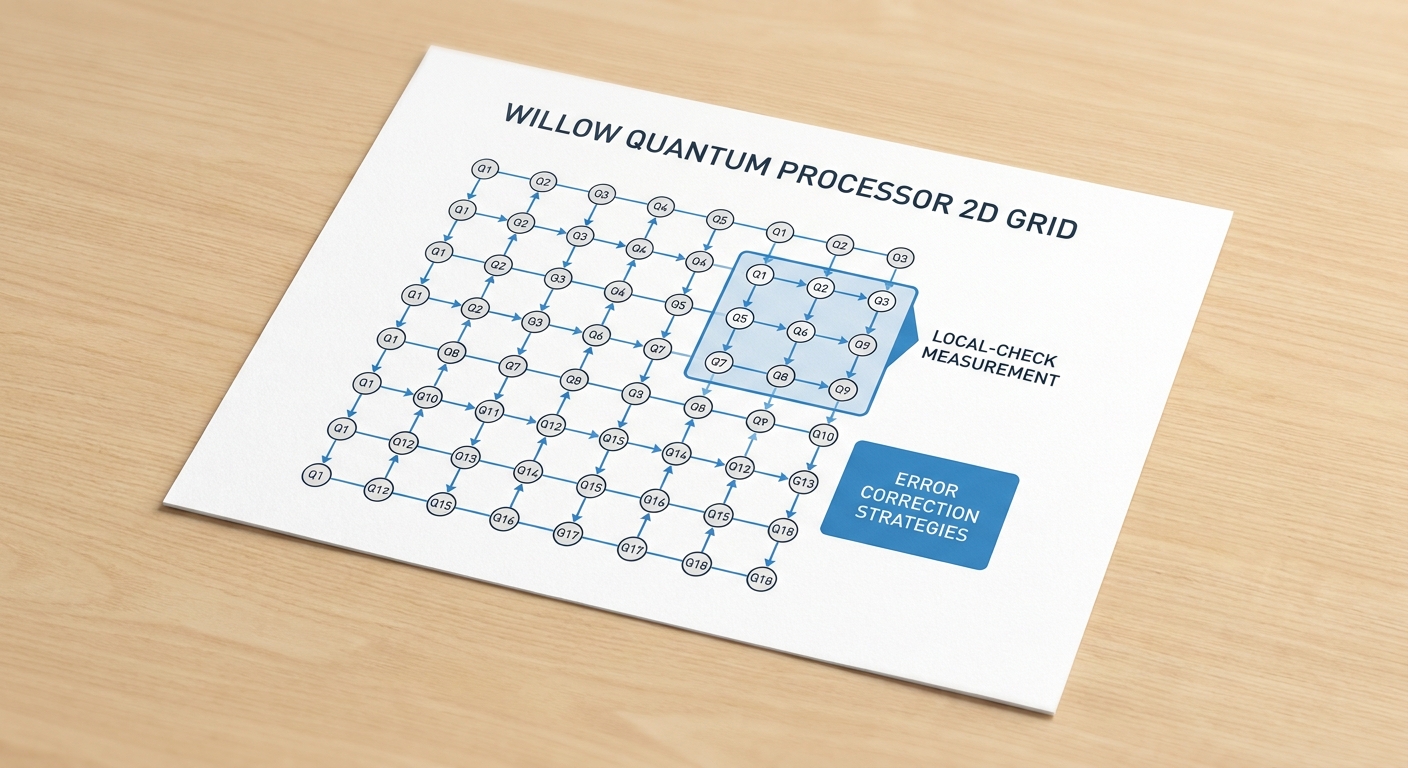
- Efficiency: The local-check measurement strategy is particularly effective for error correction, as it enables real-time monitoring of qubit states.
- Simplicity: The straightforward design of a 2D grid minimizes the physical space requirements, making it easier to manufacture and maintain.
- Scalability: As more qubits are added to the grid, the system’s capacity for handling complex calculations increases, while maintaining manageability.
Comparing 2D and 3D Designs
While 2D designs like Willow’s have demonstrated considerable strengths, the concept of 3D quantum chip architecture is also a topic of interest. A comparison reveals notable differences:
You may also like




| Feature | 2D Grid Layout | 3D Design |
|---|---|---|
| Connectivity | Neighbors only | Potentially more varied |
| Space Efficiency | Compact | More complex spatial management |
| Error Correction Capability | Optimized local checks | Potential for distributed error management |
| Manufacturing Complexity | Lower | Higher due to 3D integrations |
Error Correction in Quantum Computing
Error correction remains one of the most significant challenges in quantum computing, as qubits are susceptible to decoherence and operational errors. Willow has made strides in this area by implementing error correction techniques that work effectively within its 2D grid architecture.
Below-Threshold Error Correction
Willow’s advancements aim to achieve below-threshold error correction, which allows the processor to maintain high fidelity even as qubits are added. This improvement is critical; it paves the way for practical quantum computing applications by ensuring that calculations can be performed reliably without excessive error rates. The philosophy of using local checks enhances the system’s resilience, facilitating more complex computations that were previously impractical with earlier quantum systems.
Addressing Common Misconceptions
In discussions about quantum chip architectures, one prevalent misconception is that 3D designs are universally superior to their 2D counterparts. This belief overlooks the particular advantages that 2D layouts, like that of the Willow chip, can provide. For instance:
- 2D architectures can often achieve simpler designs and lower manufacturing costs.
- Not all computational problems necessitate the additional connectivity offered by 3D structures.
- The emphasis on qubit consistency and error correction can be more efficiently managed in a 2D framework.
Future Implications for Quantum Computing
The strides made by Willow indicate a turning point in the quantum computing landscape. The performance gains and error correction capabilities demonstrated in Google’s chip highlight the importance of thoughtful design choices in overcoming the myriad challenges faced in this field. As researchers continue to explore the trade-offs between 2D and 3D designs, Willow serves as a valuable case study for the future of quantum architecture.
Continuing Research and Development
The ongoing evolution of the Willow chip underscores the importance of continuous innovation in quantum architecture. As seen in the developments since Willow’s introduction, refining error correction and maximizing qubit functionality will remain at the forefront of research efforts. As quantum processors expand in capability, the discussion around optimal design will also persist, guiding the strategies for achieving practical, large-scale quantum computers.
FAQ
What is the Willow quantum processor?
Willow is Google’s latest superconducting quantum computing chip, designed to advance towards scalable and fault-tolerant quantum computation.
How does a two-dimensional grid layout benefit quantum computing?
A 2D grid layout allows for efficient qubit connectivity, facilitating local-check measurements that enhance error correction and operational efficiency.
What is below-threshold error correction?
Below-threshold error correction is a method that maintains high fidelity in quantum computations even as qubits increase, enabling reliable calculations.
Why might 3D designs be considered less favorable?
3D designs can introduce complexities in manufacturing and require more sophisticated spatial management and error correction mechanisms.
What are the implications of the Willow processor for future quantum computing?
The advancements demonstrated by Willow suggest that practical quantum computing is on the horizon, with implications for various industries dependent on computational power.
Conclusion
In summary, the exploration of 2D grid layouts versus 3D designs highlights the significant potential embodied by Google’s Willow quantum processor. By leveraging innovative error correction methods and maintaining efficient qubit interactions, Willow exemplifies the next steps toward practical quantum computing. Related topics such as quantum error correction strategies and alternative designs will continue to shape the conversation in this rapidly evolving field.