Understanding HP Desktop Beep Codes and Light Color Codes
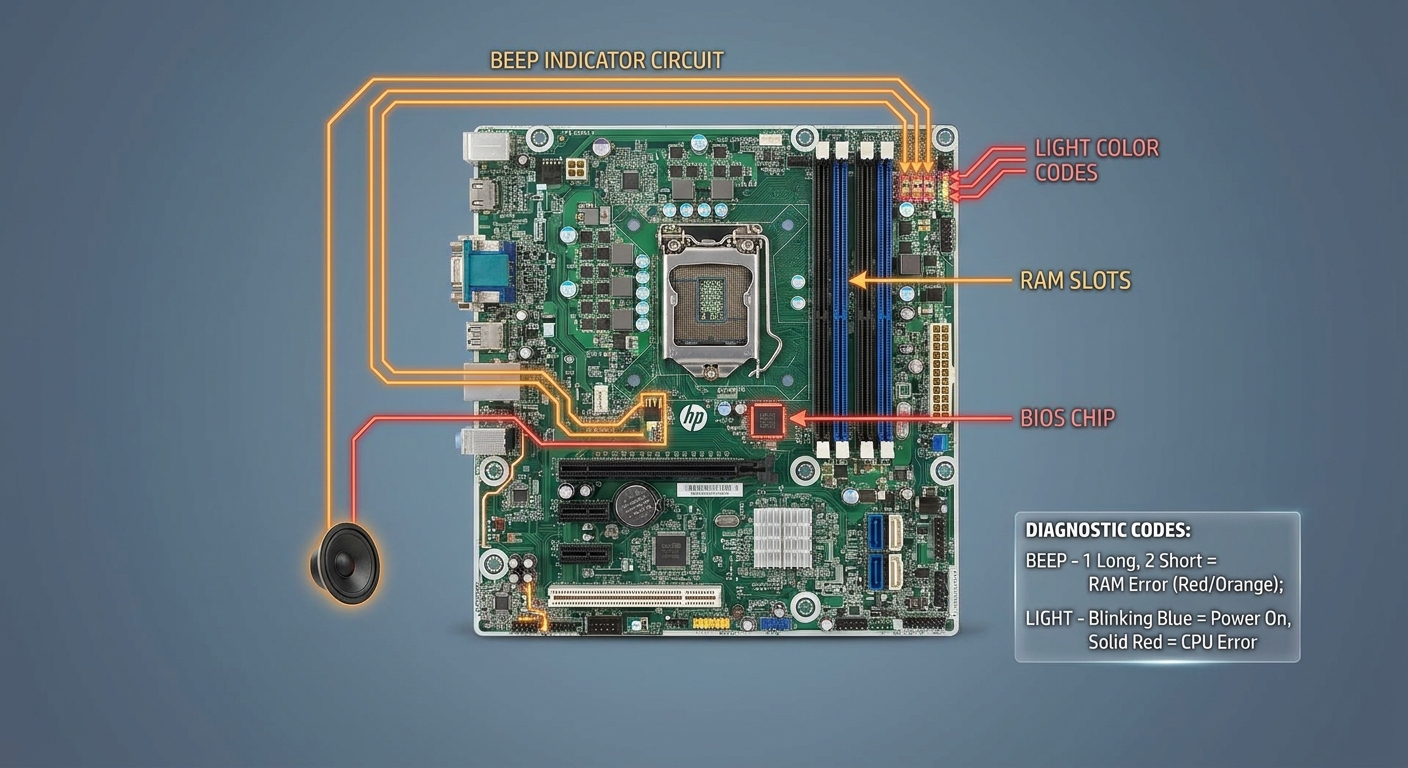
When your HP desktop experiences startup issues, it often communicates error states through a series of beep codes and flashing light patterns. These audio-visual signals are designed to alert users to specific problems within the hardware or BIOS settings. Recognizing these codes is crucial for diagnosing issues quickly and effectively, preventing unnecessary frustration and downtime. Many users may mistakenly assume that all beep codes signify catastrophic hardware failures; however, many codes indicate less severe issues such as RAM configuration or peripheral connections. By reading this article, you’ll learn about the variety of beep codes and light patterns specific to HP desktops, allowing you to troubleshoot effectively and address common issues efficiently.
How Beep Codes Work
Beep codes are a form of diagnostic information given by the computer’s BIOS during the startup process. Each code consists of a series of short and long beeps and serves as a valuable tool for identifying hardware problems. The codes are generated before the operating system loads, which means they can provide insight into hardware failures that can occur early in the boot process.
Common Beep Code Sequences
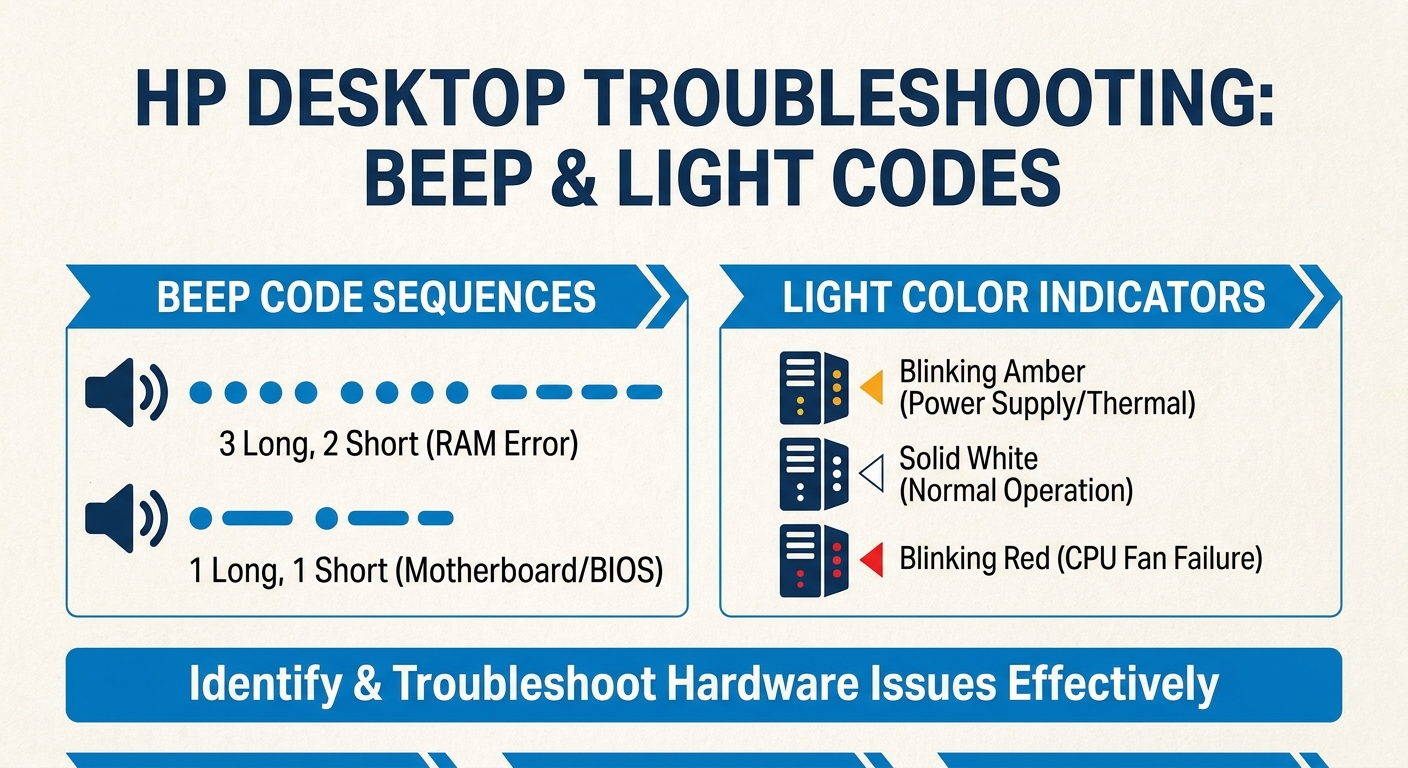
HP desktops utilize specific sequences of long and short beeps to signal errors. The following table summarizes the various beep codes and their corresponding issues:
| Beep Code | Description |
|---|---|
| 2 Long, 2 Short | Hardware failure |
| 2 Long, 3 Short | Thermal issue |
| 3 Long, 3 Short | BIOS recovery needed |
| 4 Long, 2 Short | System board issue |
| 5 Long, 5 Short | Network issue |
Light Color Codes and Their Meanings
In addition to beep codes, HP desktops also employ light color codes to indicate error states, which are particularly useful when a beep isn’t audible or the sound is muted. The color and frequency of these light signals provide immediate visual feedback about system health.
You may also like


Understanding the Color Codes
- Red Blinks: Typically indicate critical errors. For example, two red blinks followed by short white lights signal severe system issues.
- White Blinks: Usually represent minor errors, such as configuration problems or dubious peripheral connections.
Diagnostic Steps for HP Desktop Issues
If your HP desktop exhibits beep codes or light signals, follow these steps to diagnose and potentially resolve the issue:
- Note the Code: Carefully listen for the beep sequence or observe the light pattern.
- Refer to the Codes: Use the above tables to interpret the beep and light signals against known issues.
- Check Connections: Ensure that all hardware components—like RAM and graphics cards—are seated correctly.
- Inspect Components: Look for any signs of hardware failure, such as burnt circuits or broken connectors.
- Consult HP Support: If unable to resolve the problem, seek assistance from HP’s official support channels for your specific model.
Common Misconceptions about Beep Codes
Many users misunderstand the meaning and severity of beep codes. A prevalent misconception is that all series of beeps equal a complete system failure. In reality, many codes instead indicate simple issues or configurations that can be rectified without significant repair costs. Moreover, users sometimes overlook the importance of consulting the correct documentation, as different HP models may have varied beep and light codes. Hence, it is vital to reference the specific manuals or support documents for your HP desktop model.
Frequently Asked Questions
What does a series of long beeps indicate?
A series of long beeps generally indicates a specific hardware failure, which can be related to RAM or a motherboard issue.
How can I reset my BIOS after receiving a beep error?
You can reset your BIOS by removing the CMOS battery for a few minutes or using the BIOS reset jumpers available on the motherboard.
Are light codes different on laptops compared to desktops?
Yes, light codes on HP laptops utilize a different set of patterns, often leveraging the Caps Lock key light to signify errors.
What should I do if my HP desktop beeps continuously?
Continuous beeping signals persistent errors. Refer to the beep code index and proceed with troubleshooting based on the specific pattern you observe.
Where can I find more detailed troubleshooting information?
You can find comprehensive troubleshooting guides on the HP Support website.
Conclusion
Understanding beep codes and light color signals on HP desktops is essential for troubleshooting hardware issues effectively. By recognizing the communication methods utilized by your desktop during startup, you can identify problems more efficiently and reduce downtime. Familiarizing yourself with these codes empowers you to address common issues without the need for immediate professional assistance.
If you’re interested in exploring more about computer hardware and diagnostics, check out relevant resources on topics like BIOS settings and hardware maintenance.
Rotating USB