Understanding Addressable RGB (ARGB) Headers: 5V vs 12V
In the world of PC building and customization, RGB lighting has become a popular feature that enhances aesthetics and user experience. However, the terms “5V ARGB” and “12V RGB” can be confusing for newcomers. This article aims to clarify the differences between these two types of RGB headers, addressing critical questions regarding compatibility and functionality. With the ever-growing demand for advanced lighting solutions, understanding these distinctions is crucial for making informed choices. A common misconception is that all RGB lighting systems are interchangeable; however, connecting devices across these headers can result in damage. By the end of this article, readers will learn the technical differences between 5V ARGB and 12V RGB headers, how they operate, their applications, and best practices to avoid costly mistakes.
The Basics: How RGB and ARGB Headers Work
Before diving into the specifics of 5V and 12V headers, it’s essential to understand the general functioning of RGB technology. Traditional RGB (12V) and Addressable RGB (5V) have distinct operational mechanisms.
12V RGB: Analog Control
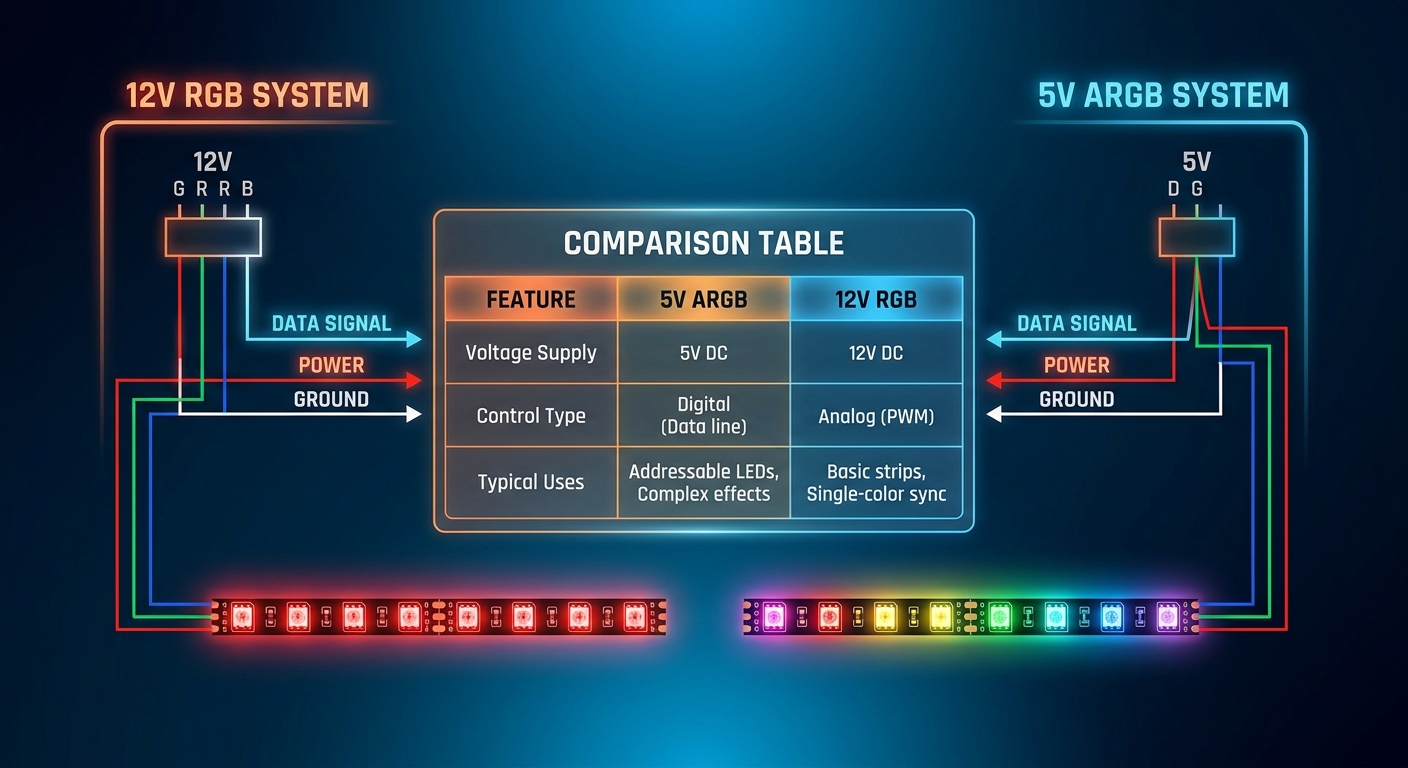
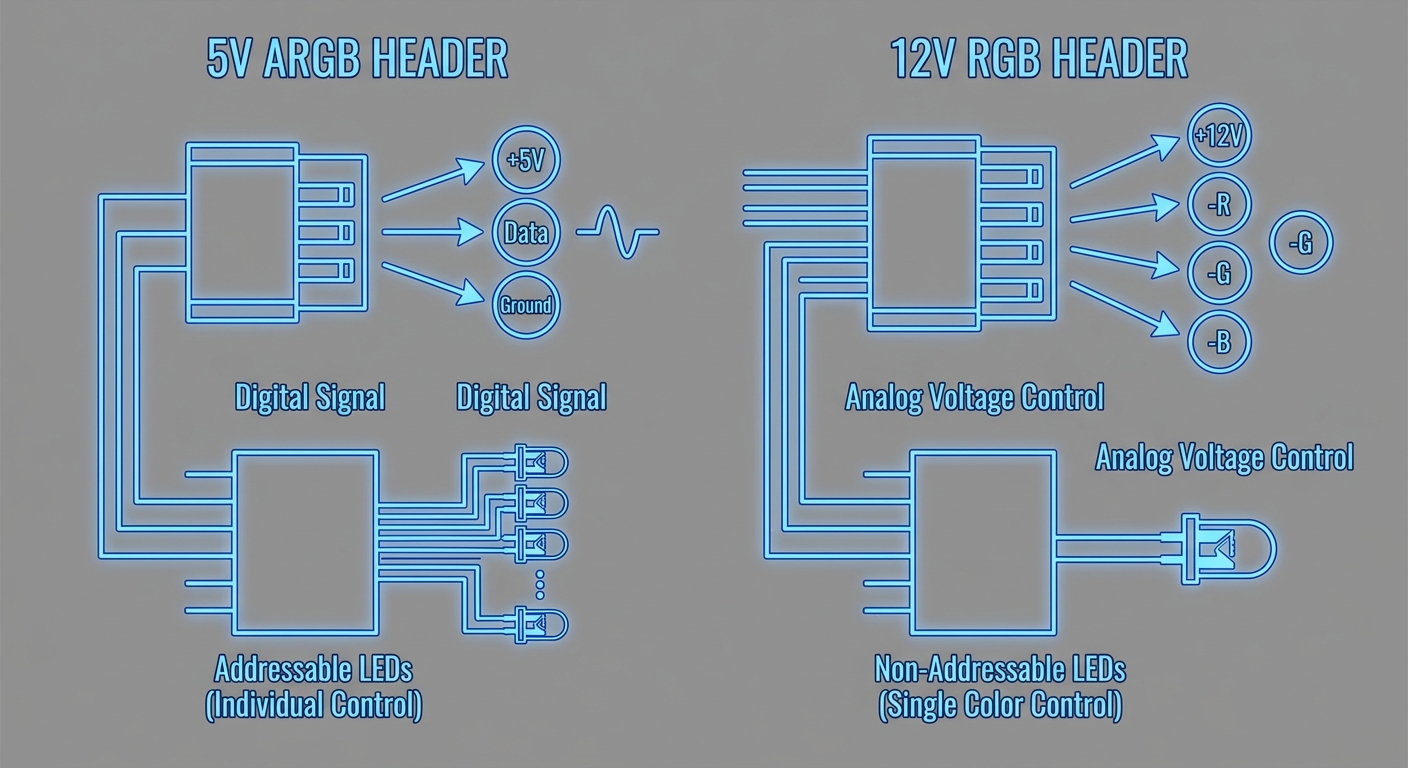
12V RGB lighting operates using analog signals, which means it requires three separate voltage signals to control the color output—one for each primary color (Red, Green, Blue). The headers implement the following configuration:
- +12V: Supplies power to the LEDs
- -G: Ground connection
- -R: Red color signal
- -G: Green color signal
- -B: Blue color signal
Because this technology does not allow for individual pixel control, all LEDs in a given strip will display the same color simultaneously.
You may also like




5V ARGB: Digital Control
In contrast, 5V Addressable RGB employs a digital communication method. Each LED is equipped with an addressable controller, which receives data packets that dictate individual color and brightness settings for each LED. The basic configuration includes:
- +5V: Supplies power to the LEDs
- Data: Digital signal carrying the information
- Ground: Common ground connection
This allows for a wide array of effects, as each LED can be controlled independently, enabling complex lighting patterns and color transitions.
Comparison Table: 5V ARGB vs. 12V RGB
| Feature | 5V ARGB | 12V RGB |
|---|---|---|
| Control Type | Digital (addressable) | Analog (non-addressable) |
| Voltage Supply | 5V | 12V |
| Color Customization | Individual LED control | Uniform LED color |
| Data Transmission | Data packets | Voltage signals |
| Typical Uses | Advanced lighting setups, effects | Basic color lighting, static displays |
Compatibility Issues
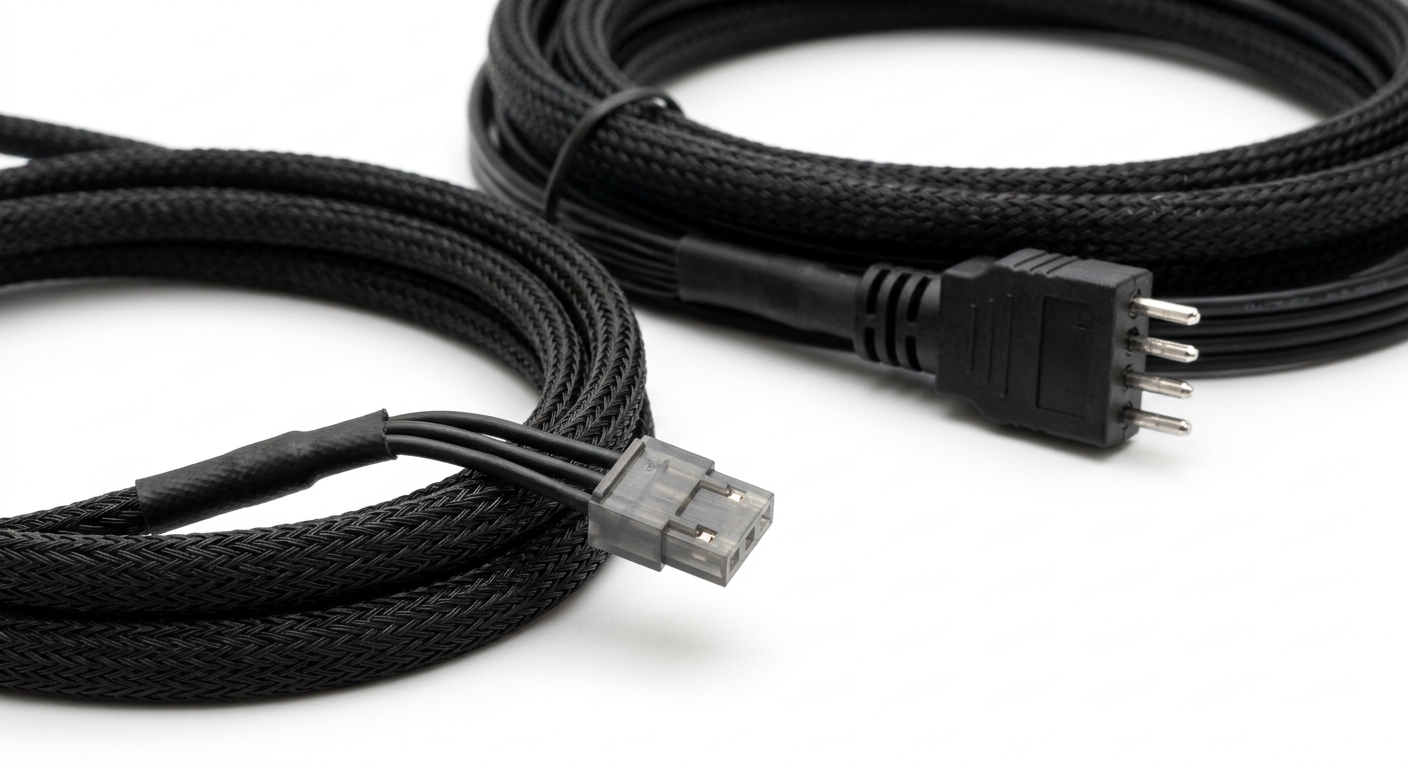
A critical aspect of using RGB lighting is ensuring device compatibility. Connecting a 5V ARGB device to a 12V RGB header can lead to irreversible damage due to the voltage difference and communication protocols. Specifically, the digital nature of ARGB is incompatible with the analog signals expected by 12V RGB headers. This can destroy the microcontroller in the ARGB device, resulting in failure to operate.
To avoid such issues, it’s important to double-check the specifications of your motherboard and RGB components. Many modern motherboards come equipped with both 5V ARGB and 12V RGB headers for added flexibility.
Choosing Between 5V ARGB and 12V RGB
The decision to use 5V ARGB or 12V RGB depends on your specific needs:
When to Choose 5V ARGB
- If you want individual control over each LED for complex lighting effects.
- For builds that require synchronization with other ARGB components.
- If your motherboard supports 5V ARGB headers.
When to Choose 12V RGB
- If you prefer simpler lighting solutions without the need for intricate effects.
- For installations where uniform color across strips is sufficient.
- When using older devices that may only support 12V RGB headers.
Common User Experiences and Best Practices
Users often report the importance of proper cable management to prevent accidental connections between different RGB systems. It’s advisable to clearly label cables and keep track of which devices connect to which headers. Additionally, many community forums and resources recommend keeping up with manufacturer documentation to ensure compatibility with the latest hardware.
FAQ
Q: Can I connect a 5V ARGB device to a 12V RGB header?
A: No, connecting a 5V ARGB device to a 12V RGB header can cause permanent damage due to the voltage difference.
Q: What does “addressable” mean in ARGB?
A: Addressable means that each LED can be controlled individually, allowing for a variety of effects and colors.
Q: How can I tell if my motherboard supports ARGB?
A: Check the motherboard specifications or user manual for any mention of 5V ARGB headers, usually labeled as “ARGB” or “WS2812B.”
Q: What are some potential advantages of using ARGB?
A: ARGB allows for greater customization, including effects like wave patterns, syncing with other devices, and flexibility in design.
Q: Can I mix ARGB and RGB components in my setup?
A: While you can use both in the same build, they must be plugged into their respective headers due to incompatibility issues.
Conclusion
Understanding the differences between 5V ARGB and 12V RGB headers is crucial for anyone engaging in custom PC builds and RGB lighting setups. Choosing the right header type ensures compatibility and enhances your lighting experience. As technology advances, new standards may emerge, making it beneficial to stay updated on lighting solutions.
For further exploration, consider reading about RGB color models or visiting manufacturer support pages like those provided by computer hardware vendors.