
Understanding ESD Straps and Anti-Static Mat Color Codes
Electrostatic discharge (ESD) poses a significant risk to sensitive electronic components, which can be easily damaged by even minute static charges. Properly utilizing ESD straps and anti-static mats can prevent such discharges, safeguarding valuable equipment and maintaining operational integrity. However, confusion often arises regarding the proper use and color codes of these protective tools. This article aims to clarify these concepts, demystifying the characteristics and functionalities of ESD straps and anti-static mats, as well as their associated color codes. With this knowledge, readers will be equipped to make informed decisions when selecting and employing ESD safety products in their work environments, thus mitigating common misconceptions about these critical devices.
The Functionality of ESD Straps
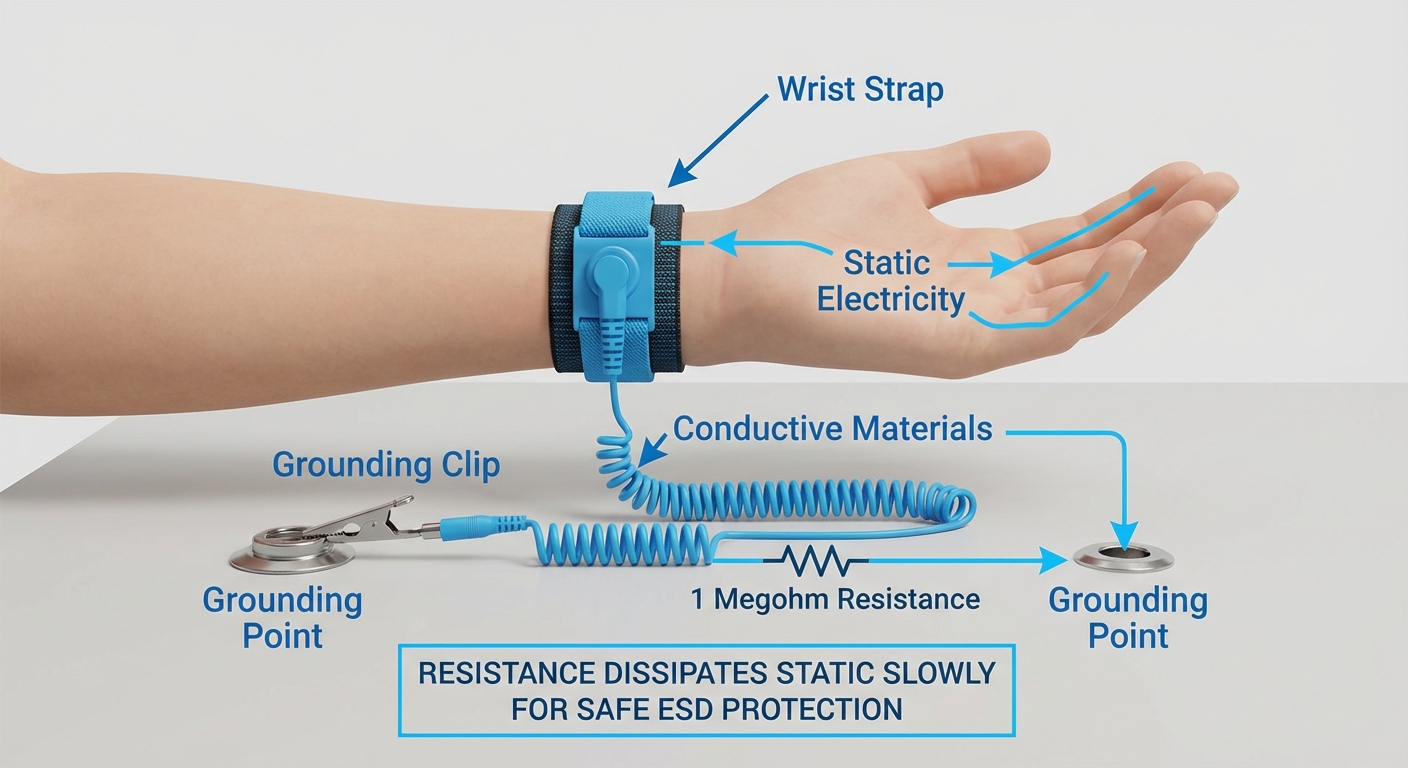
ESD straps, particularly wrist straps, are designed to safely ground the individual wearing them, effectively neutralizing any static electricity. Most commonly, ESD wrist straps feature a conductive material that connects to an earth ground through a ground cord or clip. They provide a direct path for the discharge of unwanted static, preventing it from accumulating on the user’s body. The correct resistance of these straps is crucial for their effectiveness:
- The typical resistance for ESD wrist straps is around 1 MOhm.
- These straps can come in various materials, with options including conductive rubber or metal bands to ensure efficient static discharge.
Color Codes and Their Meaning
Color coding for ESD straps varies across manufacturers, but there are common themes that usually apply:
- Blue Straps: Typically signify that the strap is conductive and can effectively dissipate static.
- Yellow Straps: Often indicate a grounding strap, which connects directly to an earth ground, usually featuring connections that are suitable for common laboratory or workbench environments.
Anti-Static Mats: Protection from Grounding Issues
Anti-static mats serve as another line of defense against ESD issues, particularly in settings where electronic assembly or repair occurs. Similar to wrist straps, these mats are critical for preventing damage to sensitive components by providing a grounding point for equipment and personnel.
You may also like




Key Features of Anti-Static Mats
Some important features to consider when working with anti-static mats include:
- Material: Mats are typically constructed from conductive vinyl or rubber to dissipate static charge.
- Grounding Point: Each mat should have a designated grounding point which connects to an earth ground, preventing static buildup.
- Resistance Levels: ESD mats can also have specific resistance levels, commonly around 1 MOhm, to ensure proper functionality.
Common Color Codes for Anti-Static Mats
Like their corresponding straps, anti-static mats also use color coding to convey important information:
- Blue Mats: Commonly signify that the mat is conductive, suitable for electronic work.
- Green Mats: Often used to indicate materials that are static-dissipative, they may provide a balance between durability and conductivity.

Installation and Maintenance of ESD Equipment
Proper installation and maintenance of ESD straps and mats are crucial for ensuring their effectiveness. The following steps outline best practices:
- Ensure the workspace surface is clean, dry, and flat to allow effective operation of mats.
- Connect the grounding wire of the anti-static mat to a suitable ground, ensuring it’s secure and functional.
- Wear the ESD strap on the wrist while working, ensuring there is continuous contact with the skin.
- Regularly inspect both mats and straps for signs of wear and tear or damage, which can inhibit their functionality.
Resources for Further Information
For those seeking additional insights into ESD protection practices, various manufacturers provide detailed datasheets and guides that explain the nuances of their products:
- Widaco provides technical details about ESD wrist straps and mats on their website.
- StarTech offers comprehensive product documentation for their anti-static mats and grounding tools.
FAQ
Q1: What is the primary purpose of an ESD strap?
A: ESD straps are designed to ground the wearer, preventing the buildup and discharge of static electricity that can damage electronic components.
Q2: How should I connect my anti-static mat?
A: The anti-static mat should be connected to a dedicated grounding point; this connection should ideally ground to the earth to effectively dissipate any static charge.
Q3: What is a safe resistance level for ESD wrist straps?
A: A resistance level of approximately 1 MOhm is considered standard for ESD wrist straps to ensure safe dissipation of static electricity.
Q4: Do color codes for ESD straps and mats differ between manufacturers?
A: Yes, while there are common themes, different manufacturers may have slight variations in their color coding. It’s important to check the product specifications for accurate information.
Q5: How often should I inspect my ESD equipment?
A: Regular inspections should be conducted, ideally before each use, to check for wear and ensure all connections are secure.
Conclusion
Understanding ESD straps and anti-static mats, including their functionality and color coding, is essential for anyone working closely with electronic components. Proper use of these tools minimizes the risk of static damage, ensuring higher operational efficiency. Considering related topics such as ESD-safe work environments can further enhance protection against electrostatic discharge.
Rotating USB