
Introduction
The realm of quantum computing has witnessed monumental advancements, particularly with the introduction of Google’s latest chip, Willow. This innovation marks a significant leap forward in the pursuit of scalable and fault-tolerant quantum computers, setting the stage for transformative applications across various sectors. The central question this article addresses is: Why will future quantum computers be built on the foundation laid by Willow? Understanding the implications of this technology matters greatly, as it promises to enhance computational capabilities beyond the limits of classical systems. A common misconception is that quantum computing is solely about the number of qubits; however, the focus is shifting toward the quality and functionality of these qubits. Readers will gain insight into the capabilities of the Willow chip, its significance in the quantum computing landscape, and why it is poised to be a game-changer in the computing arena.
Willow: A Technical Overview
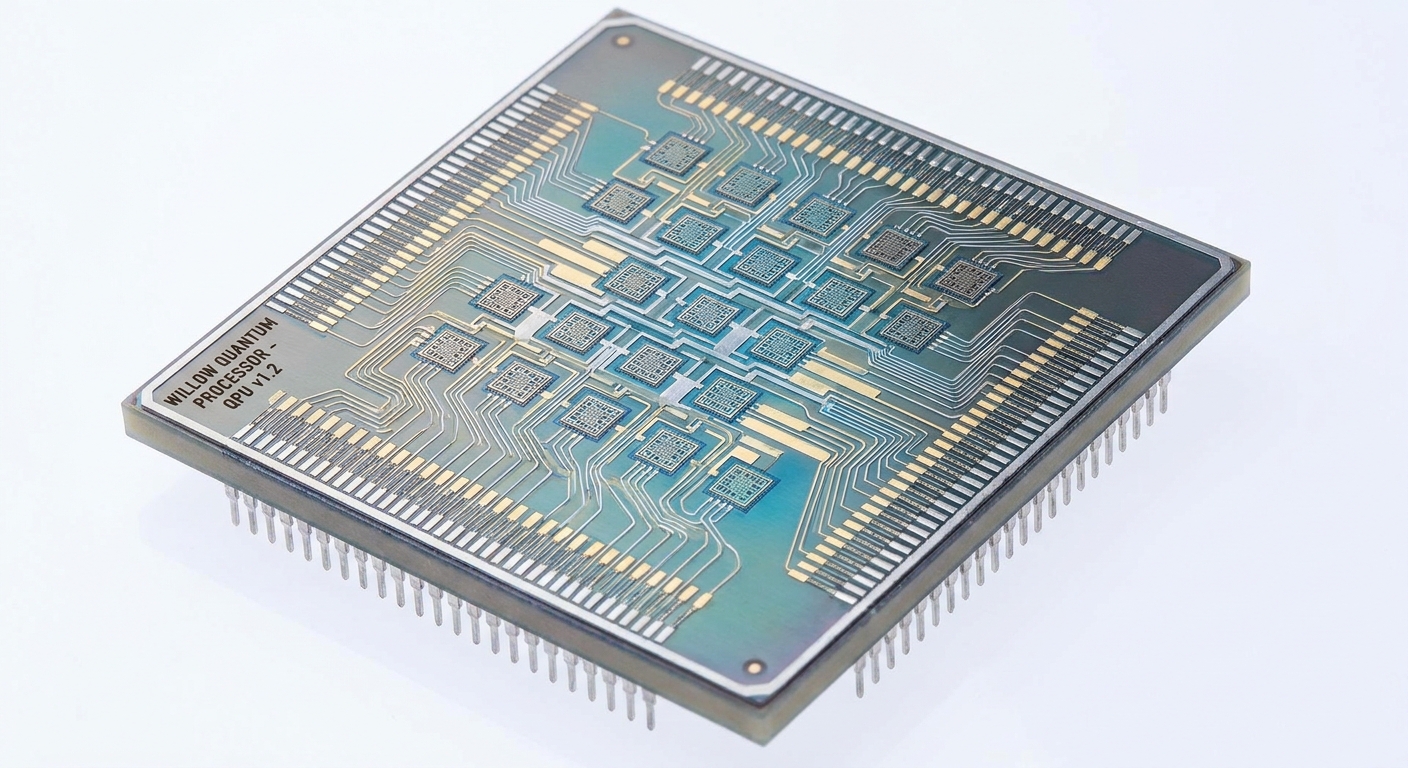
Willow, Google’s latest superconducting quantum computing chip, is a game-changer in the field of quantum technology. Built as the successor to the Sycamore processor, which famously demonstrated quantum supremacy in 2019, Willow is not just about achieving this milestone but also about advancing toward practical, scalable quantum computation.
Underlying Technology
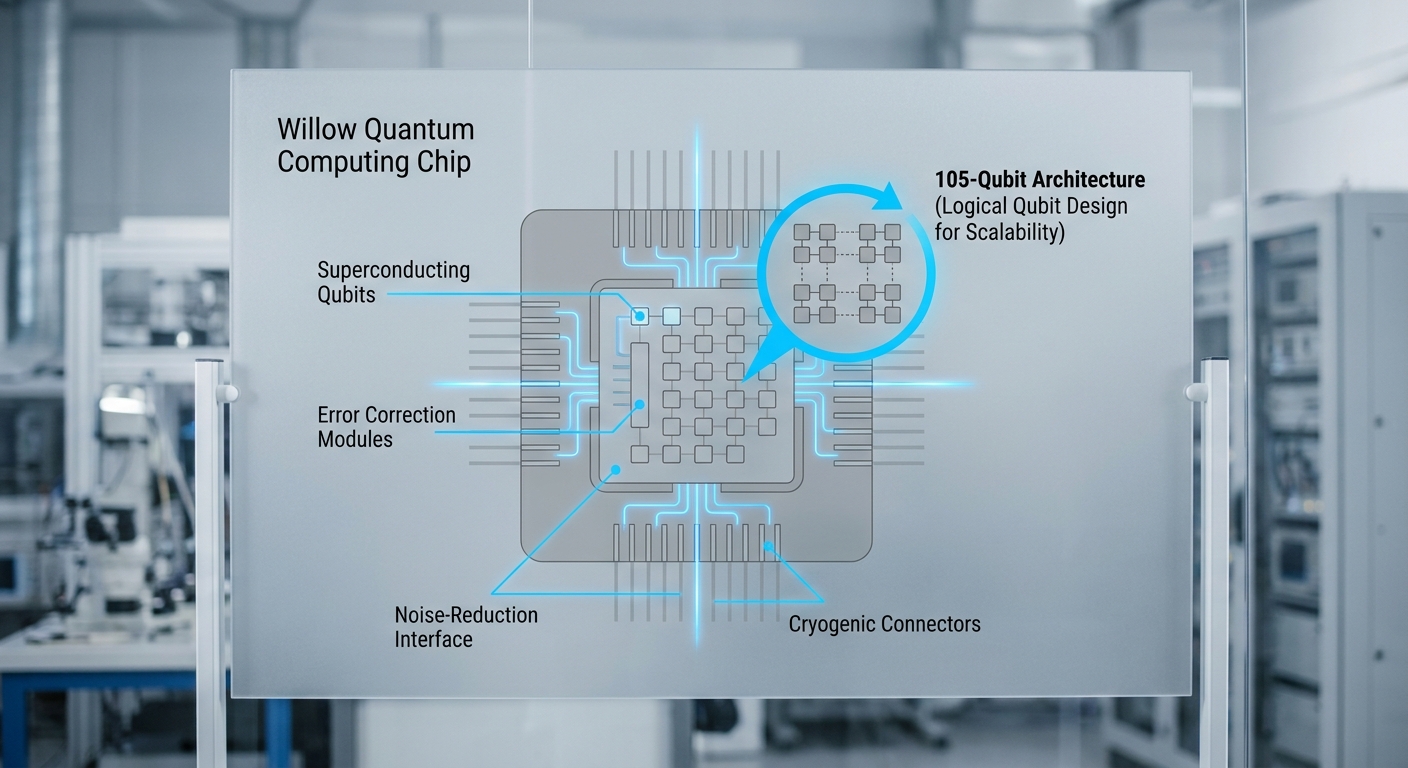
Constructed on superconducting qubits, Willow showcases significant advancements in error correction techniques, allowing it to perform below-threshold error corrections. This is crucial for handling complex computations effectively. The architecture of Willow supports the development of logical qubits that can withstand longer calculations, providing a foundation for reliable computing. Here are some of the key technical features:
- 105-qubit architecture
- Enhanced error correction capabilities
- Focus on qubit stability and gate precision
- Designed to minimize environmental noise
Scalability and Fault Tolerance
The transition from concept to practical applications is a key focus for Willow. Unlike its predecessor, which was limited to proof-of-concept experiments, Willow aims at addressing the scalability challenge that has plagued the quantum computing industry. This shift emphasizes the importance of not just how many qubits a processor can house but how effective and reliable they are in performing calculations.
You may also like




Significance of Willow in Quantum Computing
As quantum computing continues to evolve, Willow represents an important milestone in reaching quantum advantage. This advantage means that quantum computers can solve specific problems more efficiently than classical computers. Key factors driving this significance include:
- Ability to manage error rates, allowing for longer calculations without failure.
- Advancements in qubit stability, which enhance overall system performance.
- Real-world applicability and the potential for industry-specific solutions.
Real-World Applications and Future Potential
The implications of Willow extend beyond theoretical research. As industries begin to adopt quantum technologies, practical applications are becoming a reality. Some potential use cases include:
- Drug discovery and molecular modeling
- Complex optimization problems in logistics and supply chains
- Financial modeling and risk analysis
- Machine learning and data analysis enhancements
With the groundwork laid by Willow, future quantum computers will aim to build on these initial successes and tackle increasingly complex challenges.
Challenges Ahead
While the advancements brought about by Willow are invigorating, there are still hurdles to overcome in the quest for a fully operational quantum computer. These challenges include:
- Standardization of metrics for measuring quantum computing progress.
- High costs associated with developing and maintaining quantum computing systems.
- Continuous research in achieving better error rates and qubit designs.
Experts emphasize the importance of addressing these challenges to accelerate the transition from research laboratories to practical applications in various fields.
FAQ
What is the Willow quantum computing chip?
The Willow chip is Google Quantum AI’s latest superconducting quantum computing processor, designed for scalable, fault-tolerant quantum computation.
How does Willow improve upon previous quantum processors?
Willow improves upon previous processors by focusing on error correction and qubit stability, enabling it to perform below-threshold error corrections that enhance reliability in computations.
What are the potential applications of Willow?
Potential applications include drug discovery, financial modeling, complex optimization problems, and advancements in machine learning.
Why is scalability important in quantum computing?
Scalability is crucial as it determines the number of qubits that can be effectively used in computations, impacting the ability to solve complex problems efficiently.
What challenges does Google face with the development of Willow?
Challenges include standardizing performance metrics, high development costs, and achieving lower error rates in qubits.
Conclusion
In summary, Willow represents the next important step in building practical quantum computers designed for real-world applications. Its advancements in error correction and focus on scalability lay the groundwork for future innovations. As quantum computing continues to evolve, technologies like Willow will drive significant breakthroughs across various fields, fundamentally changing our computational capabilities.
For more insights on quantum technologies, you can explore related topics such as qubit design and error correction methodologies.
Rotating USB