Introduction
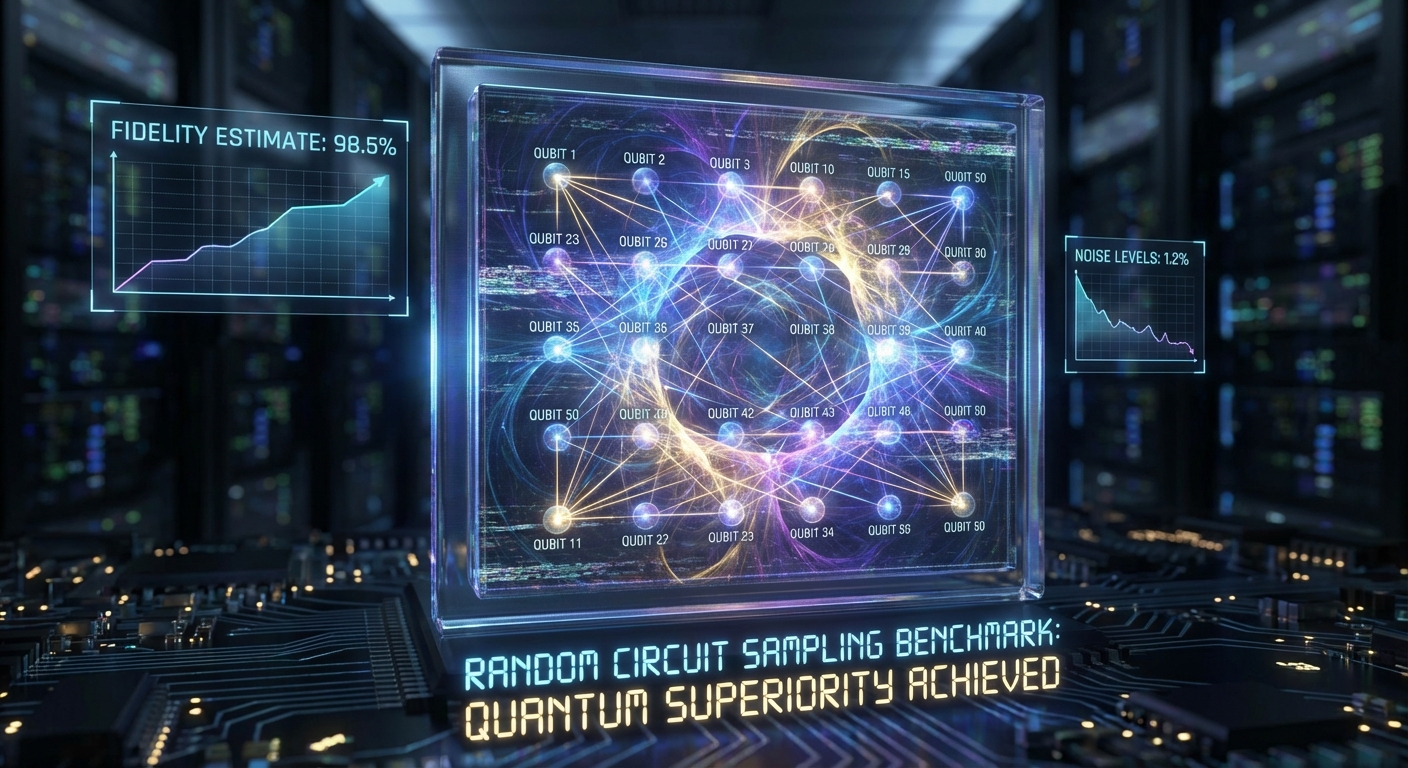
The advent of quantum computing has fueled intense research and debate, particularly around the benchmarks that determine the capabilities of these powerful machines. One such benchmark is Random Circuit Sampling (RCS), which has emerged as a critical tool for proving the superiority of quantum computers over classical systems. This article aims to delve into what RCS is, how it works, and why it represents a substantial leap forward in computational capability. At the heart of the matter lies a troubling question: how do we validate that quantum computers can indeed perform tasks that are insurmountable for classical counterparts? Understanding this benchmark is crucial, not only for the progression of quantum technologies but also for accurately positioning their potential in real-world applications. A common misconception is that noise in quantum computing makes it inherently unreliable; however, recent studies have shown that even noisy quantum computers can outperform their classical counterparts under specific conditions. In this article, readers will learn about the mechanics of RCS, its importance, the strategy employed by Google’s quantum processors, and the implications of ongoing research in this dynamic field.
Understanding Random Circuit Sampling
Random Circuit Sampling is a method designed to evaluate the capabilities of quantum processors by measuring how well they can generate outputs from complex quantum circuits. The fundamental challenge presented by RCS is that the expected output distributions from these circuits quickly become unmanageable for classical computers as the number of qubits increases, rendering simulations infeasible.
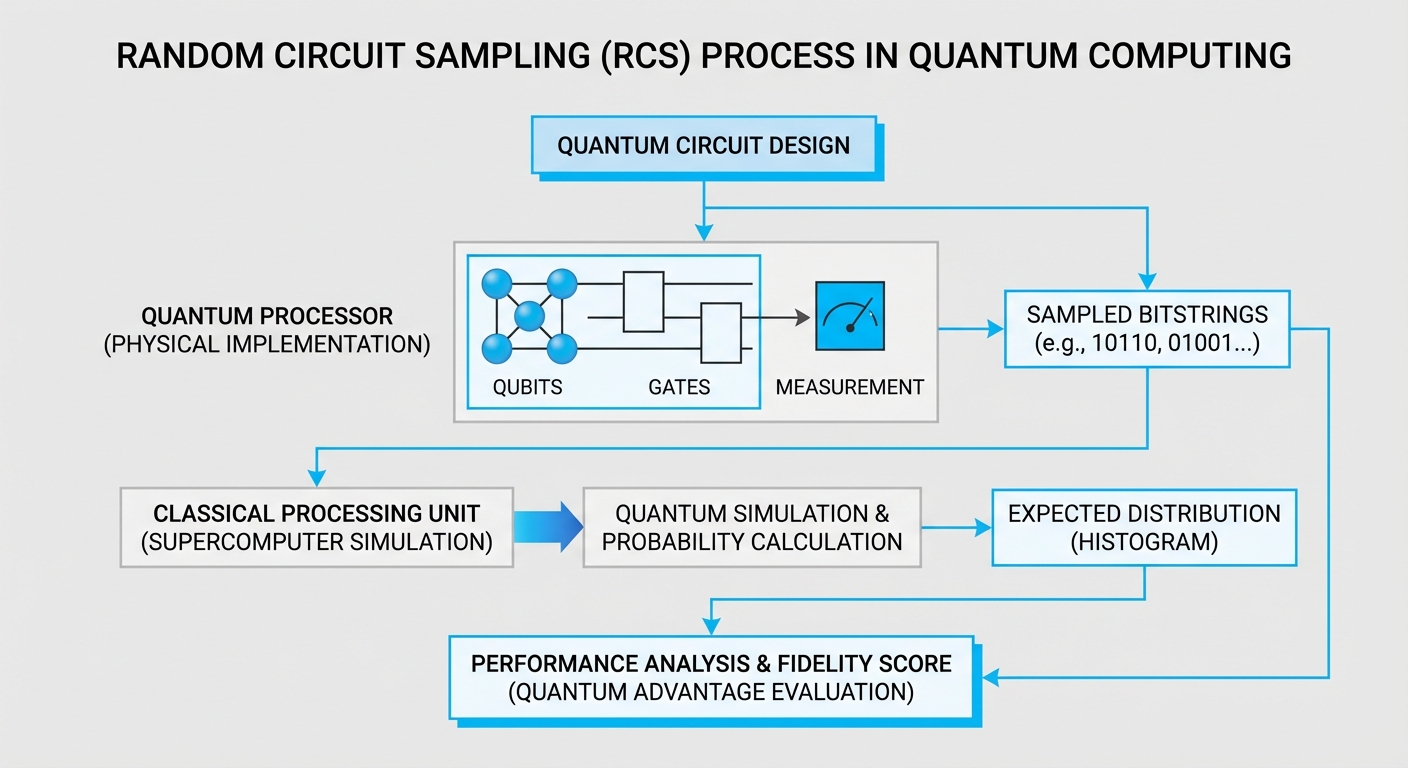
A key factor contributing to the efficacy of RCS as a benchmark is the absence of mathematical shortcuts to simplify the output of the quantum circuits. This complexity makes RCS particularly valuable in the context of proving quantum supremacy—an achievement that Google claimed in 2019. In their groundbreaking experiment, Google’s quantum computer, Sycamore, executed random quantum circuits until the classical supercomputer failed to keep up, thus showcasing the true potential of quantum computation.
Benchmarking Quantum Performance
As highlighted in several studies, including research published in Nature, RCS serves as an effective gauge of performance even in the presence of noise. The key outcomes from RCS benchmarking include fidelity estimates that indicate how close a quantum processor’s state is to that of an ideal, noise-free quantum computer. The results of RCS experiments can differ significantly based on the number of qubits and the levels of noise introduced. Notably, recent research has identified two distinct phase transitions that govern quantum computer behavior, demonstrating that these systems can still exhibit superior performance relative to classical supercomputers despite inherent noise.
You may also like


Google’s Sycamore and RCS
Google’s Sycamore quantum processor has become synonymous with RCS benchmarks. Through a series of tests, Sycamore operated on random quantum circuits, producing outputs that proved untenable for the classical supercomputers tasked with simulating them. This computational test involved computing increasingly complex circuits over time, at which point neither classical methods nor optimized shortcuts could manage the task. The result marked a significant milestone for quantum computing, as Sycamore effectively demonstrated capabilities far beyond traditional computing limits.
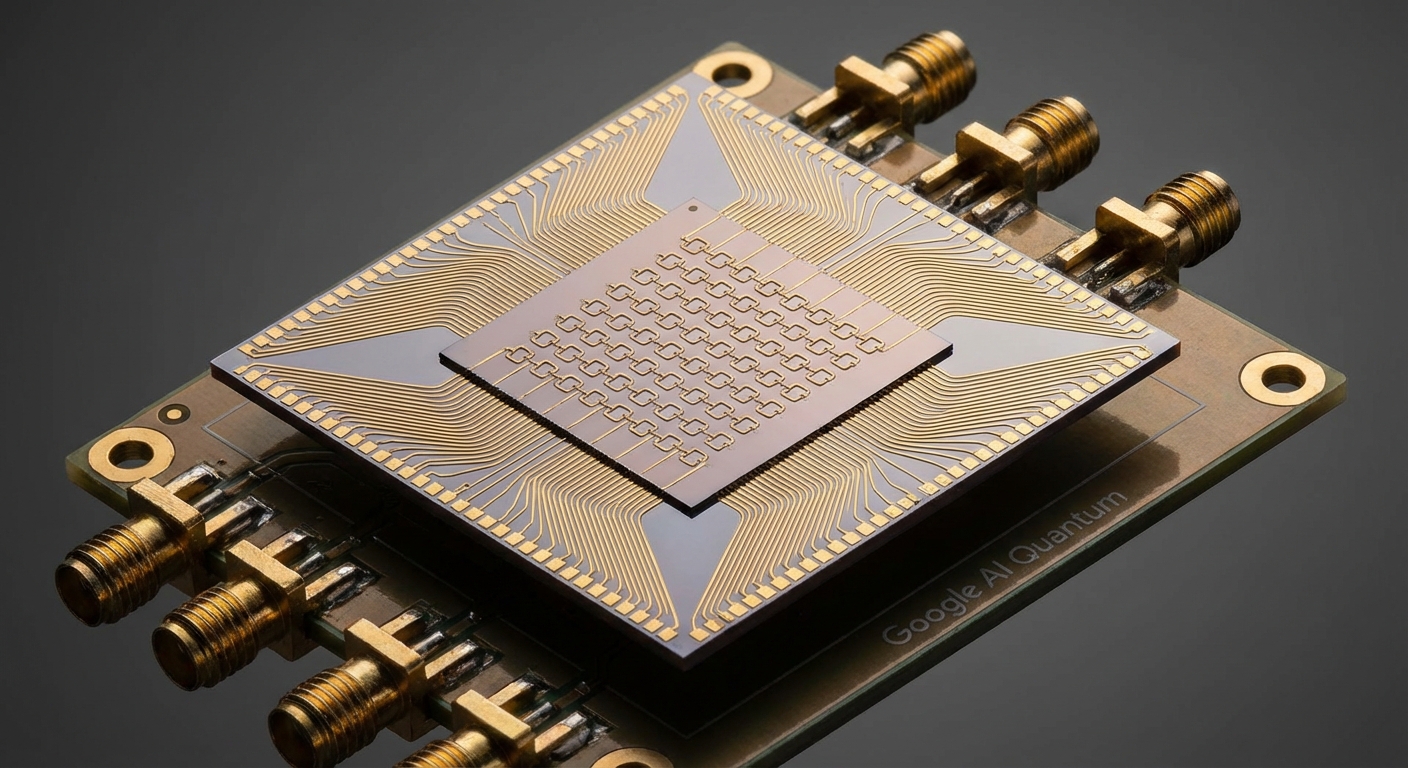
This experiment leveraged specific parameters, such as 67 qubits at 32 cycles, confirming that the computational demand exceeded that of classical systems. Sycamore’s success prompted further exploration into the phase transitions observed in random circuit sampling, leading researchers to analyze how noise affects computation and the resulting fidelity.
Noise and Its Implications in Quantum Computing
A common issue associated with quantum computing is the presence of noise, which can lead to errors in computations. However, recent investigations into noise-induced phase transitions within the framework of RCS have revealed that certain noise levels might not significantly hinder a quantum computer’s performance. Experimentation has demonstrated that quantum computers can still interplay effectively with noise, allowing them to solve specific problems more efficiently than classical supercomputers.
For example, researchers identified that under weak noise conditions, quantum processors were capable of maintaining performance and demonstrating superior capabilities over classical systems. The investigations looked at the impact of error rates on the quantum circuits and how these relate to the overall fidelity achieved in the output distributions. This understanding positions RCS as not only a benchmark for performance but also a critical tool in mitigating the noise challenges faced in the field.
Future Directions in Quantum Benchmarking
The ongoing exploration of RCS as a benchmark is evolving, and it has broad implications for the future of quantum computing. Research groups are actively working on methods to enhance fidelity and decrease error rates, aiming to expand the range of applications where quantum processors could potentially exceed classical capabilities. As quantum technology continues to develop, the need for accurate and robust benchmarks like RCS will become increasingly vital in guiding research and development.
Beyond the immediate performance metrics, RCS has opened up avenues for exploring areas such as quantum error correction, scaling quantum systems, and integrating quantum computing with existing computing architectures. This multifaceted approach strengthens the relevance of RCS in the trajectory of quantum technology development, with the potential for significant breakthroughs as deeper understanding and innovative techniques emerge.
FAQ
Q1: What is Random Circuit Sampling (RCS)?
A1: RCS is a benchmark used to evaluate how effectively a quantum computer can produce outputs from complex quantum circuits, demonstrating its computational capabilities compared to classical computers.
Q2: Why is RCS important for quantum computing?
A2: RCS is crucial because it tests the limits of computational feasibility, revealing the potential of quantum computers to outperform classical systems in specific tasks as the complexity of circuits increases.
Q3: How did Google use RCS to demonstrate quantum supremacy?
A3: Google utilized RCS by executing complex quantum circuits on its Sycamore processor, reaching a point where classical supercomputers were unable to replicate the outputs, thus showcasing the advantages of quantum computation.
Q4: What role does noise play in quantum computing?
A4: Noise can introduce errors in quantum computations; however, recent studies have shown that under certain conditions, quantum computers can still perform effectively despite noise, particularly when evaluated through RCS.
Q5: What are the future implications of RCS for quantum technology?
A5: RCS will remain a pivotal benchmark as quantum technology evolves, guiding research on error correction, scaling systems, and integrating quantum computing into existing infrastructures.
Conclusion
In summary, Random Circuit Sampling stands as a critical benchmark for assessing and validating the capabilities of quantum computers, particularly in their confrontation with classical systems. The findings around RCS not only highlight the potential of quantum supremacy but also explore the implications of noise in computational tasks. As quantum technology matures, the insights gained from RCS will be pivotal in addressing the challenges and optimizing the functionality of these groundbreaking systems.
Related topics such as quantum error correction and quantum networking will also greatly benefit from advancements in benchmarking techniques like RCS.
Rotating USB