Introduction
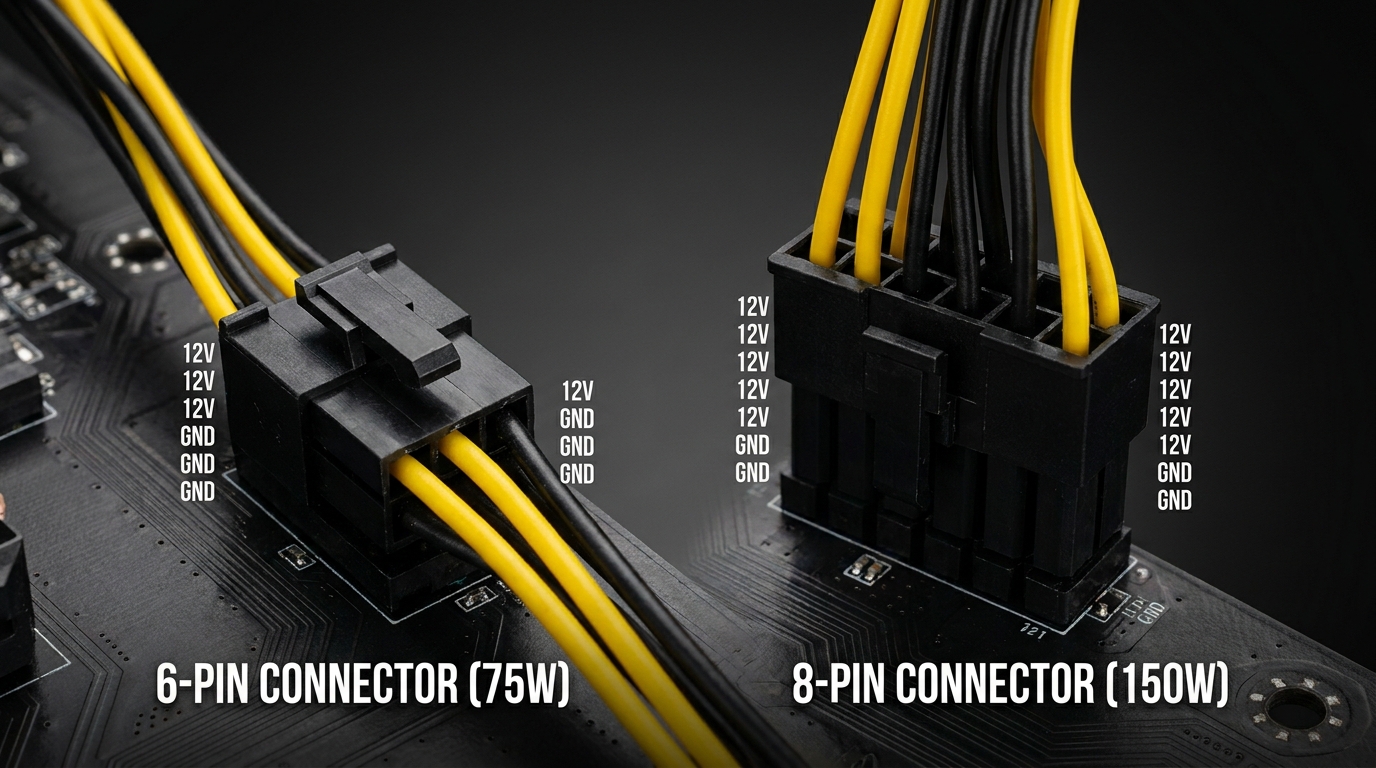
The intricacies of computer hardware often lead to confusion, especially when it comes to power connections. One common area of confusion lies between 6-pin and 8-pin PCIe power cables. Understanding the differences between these two types of cables is essential for anyone building or upgrading a PC, as incorrect connections can hinder performance or even damage components. This article addresses the problem of distinguishing between 6-pin and 8-pin PCIe power cables, clarifying their functions, specifications, and the implications of using one over the other. Misconceptions about these cables often stem from their similar appearances, but the distinctions are crucial for power requirements. By the end of this article, readers will gain a comprehensive understanding of the differences, including pin configurations, power limits, and practical use cases.
Understanding PCIe Power Cables
PCIe power cables are essential for providing additional power to graphics cards, which are often the most power-hungry components in modern computer systems. As graphics technology advances, higher performance cards require more power than a motherboard can supply alone. This is where PCIe power connectors come into play. Below, we explain the specifications and capabilities of 6-pin and 8-pin PCIe connectors.
Basic Specifications
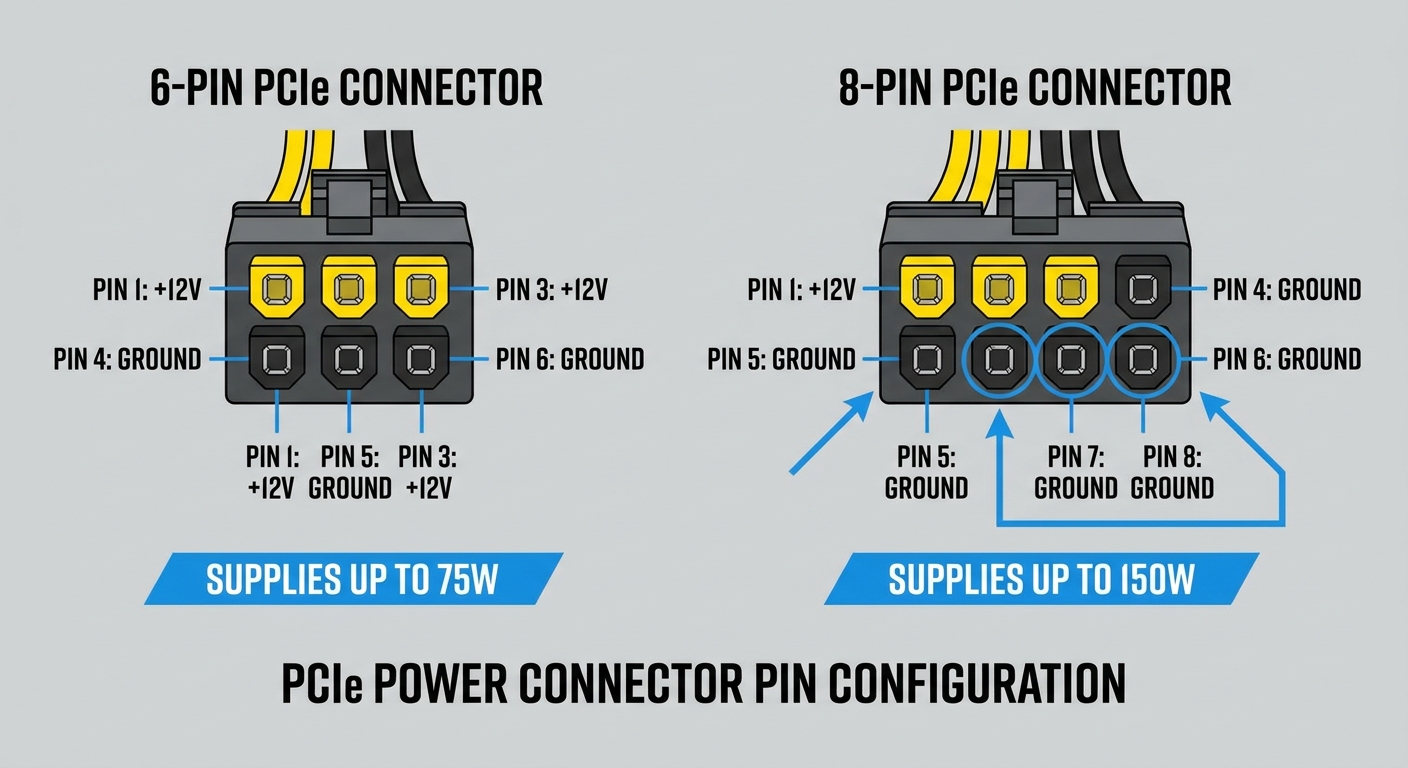
- 6-Pin PCIe Connector: Supplies up to 75 watts of power and consists of six pins, with three for +12V connections and three for ground connections.
- 8-Pin PCIe Connector: Supplies up to 150 watts, with eight pins that include two additional +12V pins, enhancing its voltage delivery capabilities.
Pin Configuration
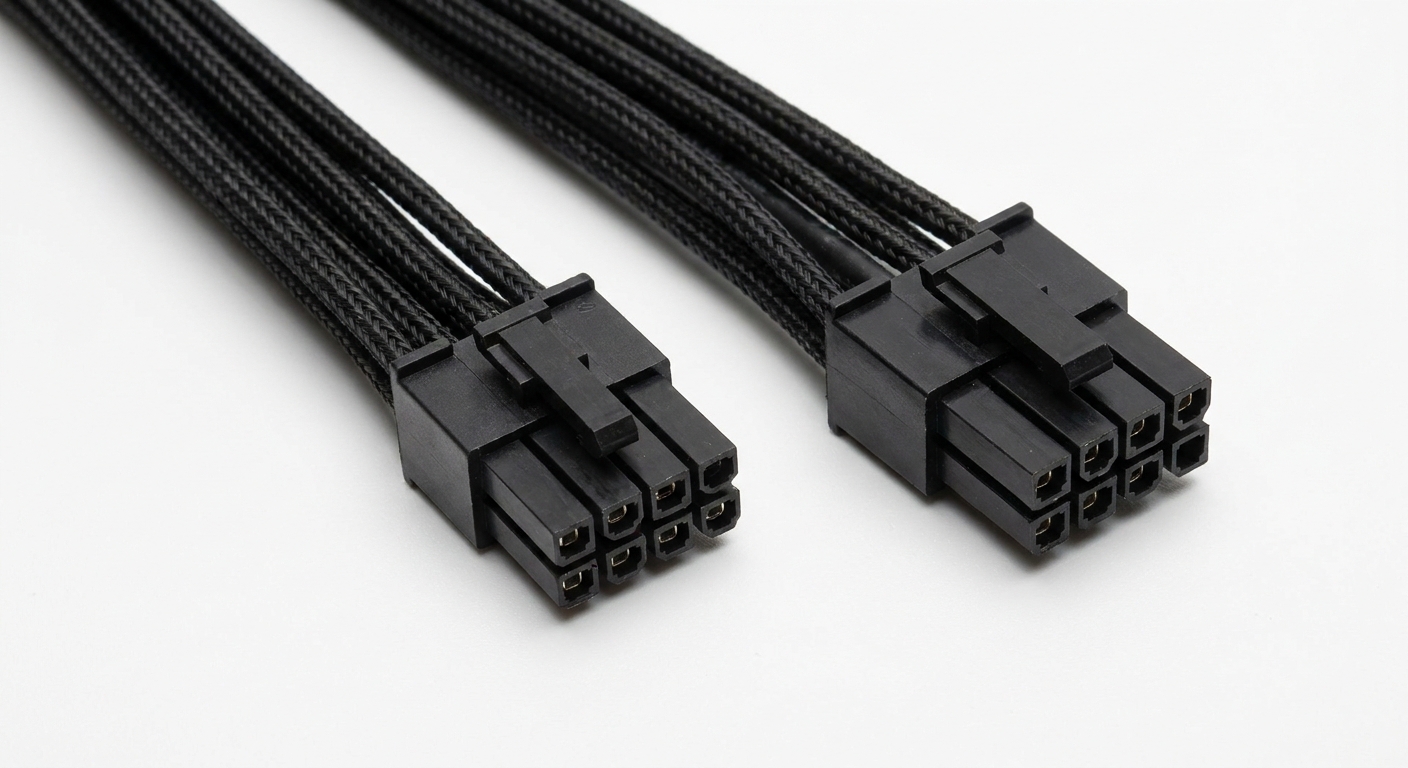
While both 6-pin and 8-pin connectors share a similar design, it’s the arrangement of their pins that sets them apart. The 6-pin cable consists of three pairs of pins: two for power and one for ground. The 8-pin variant adds two extra pins on the right side of the connector, comprised of additional +12V and ground connections. This extra capability allows the 8-pin connector to handle more demanding GPUs.
Power Specifications
| Connector Type | Power Supply (Watts) | Pin Count | Typical Use |
|---|---|---|---|
| 6-Pin PCIe | 75W | 6 | Mid-range graphics cards |
| 8-Pin PCIe | 150W | 8 | High-end graphics cards |
Common Misconceptions
One of the predominant misconceptions regarding these power connectors is that a 6-pin PCIe cable can suffice for any GPU, which is not true. High-performance GPUs often require an 8-pin connection due to their higher power demands. Using a 6-pin cable for such demanding graphics cards may result in inadequate power delivery, causing instability or, worse, hardware failure.
You may also like


Real-World Applications
When assembling a PC or upgrading components, understanding power needs is vital. For instance, a mid-range graphics card may only require a 6-pin connection, while top-tier GPUs often necessitate an 8-pin connector to operate efficiently. Furthermore, many modern PSUs (Power Supply Units) come equipped with both types of connectors or even hybrid cables designed to provide both 6-pin and 8-pin configurations, giving users flexibility.
Upgrading and Downgrading Power Requirements
For users who plan to upgrade their graphics cards, it is essential to ensure that the PSU has an adequate number of 8-pin connectors. For older power supplies that lack sufficient 8-pin connectors, there are adapters available that can convert 6-pin connectors to 8-pin. However, caution should be exercised; using adapters may lead to potential power supply issues or hardware instability if the GPU requires more power than the adapter can safely deliver.
FAQ
What happens if I use a 6-pin connector on an 8-pin GPU?
Using a 6-pin connector on a GPU that requires an 8-pin connection can lead to insufficient power supply, potentially causing system crashes, instability, or overheating.
Can I use an 8-pin cable on a 6-pin GPU?
Yes, an 8-pin cable can be used on a 6-pin GPU since the additional two pins can be ignored. The GPU will only draw the necessary power.
Is there any difference in performance between using a 6-pin and 8-pin connector?
While there may not be a direct performance difference when using an appropriate connector, using a 6-pin cable on a demanding GPU may lead to power shortage issues, affecting overall system stability.
Are all PSUs equipped with PCIe power connectors?
No, not all power supplies come with PCIe power connectors. It is crucial to check the specifications of your PSU before purchasing a GPU to ensure compatibility.
Can I use a 6-pin to 8-pin adapter safely?
Using a 6-pin to 8-pin adapter can be safe if the power requirements of the GPU do not exceed what the 6-pin connector can provide. However, this can create a risk if the adapter cannot handle the required wattage.
Conclusion
Understanding the differences and specifications between 6-pin and 8-pin PCIe power cables is fundamental for proper PC hardware configuration. Failing to use the correct type of cable can lead to inadequate performance or hardware damage. Whether you’re building a new rig or upgrading an existing one, always ensure that your power supply meets the specific needs of your graphics card to maintain system stability and performance. For more in-depth information about PC components, resources like Wikipedia can provide additional details, and checking with manufacturers can offer support on specific models.
Rotating USB