Understanding PC Power Supply Wire Color Codes
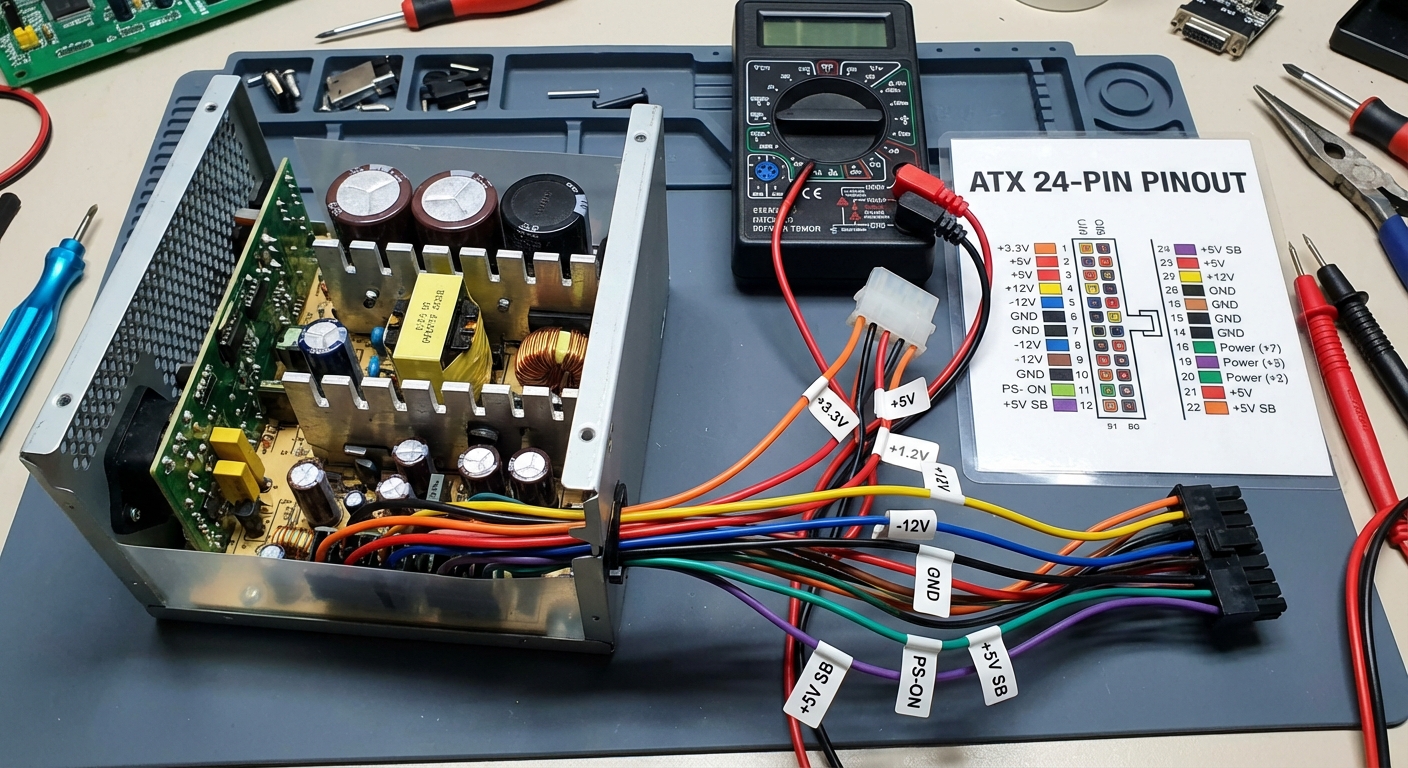
PC power supplies are crucial components in any computer system, providing the necessary voltage and current to power various hardware components. However, if you’ve ever tried to install or replace a power supply, you might have faced the confusing task of deciphering wire color codes. This article addresses the question of how to accurately read and interpret PC power supply wire color codes. Understanding these codes is essential for assembling or troubleshooting a PC correctly and safely. One common misconception is that all power supplies follow the same color codes; however, variations exist among different manufacturers. By the end of this article, you will learn the standard color codes for various power supply connectors and wires, their functions, and tips for identifying and using them safely.
How PC Power Supplies Work
A PC power supply transforms AC power from the wall outlet into the DC power required by computer components. It receives power from the mains and converts it through a series of electrical circuits to produce different voltage levels, which are then delivered through a variety of connectors. Understanding the color coding of these wires is essential for proper assembly and maintenance of the system.
Color Code Standards for PC Power Supply Wires
Standard ATX Power Supply Colors
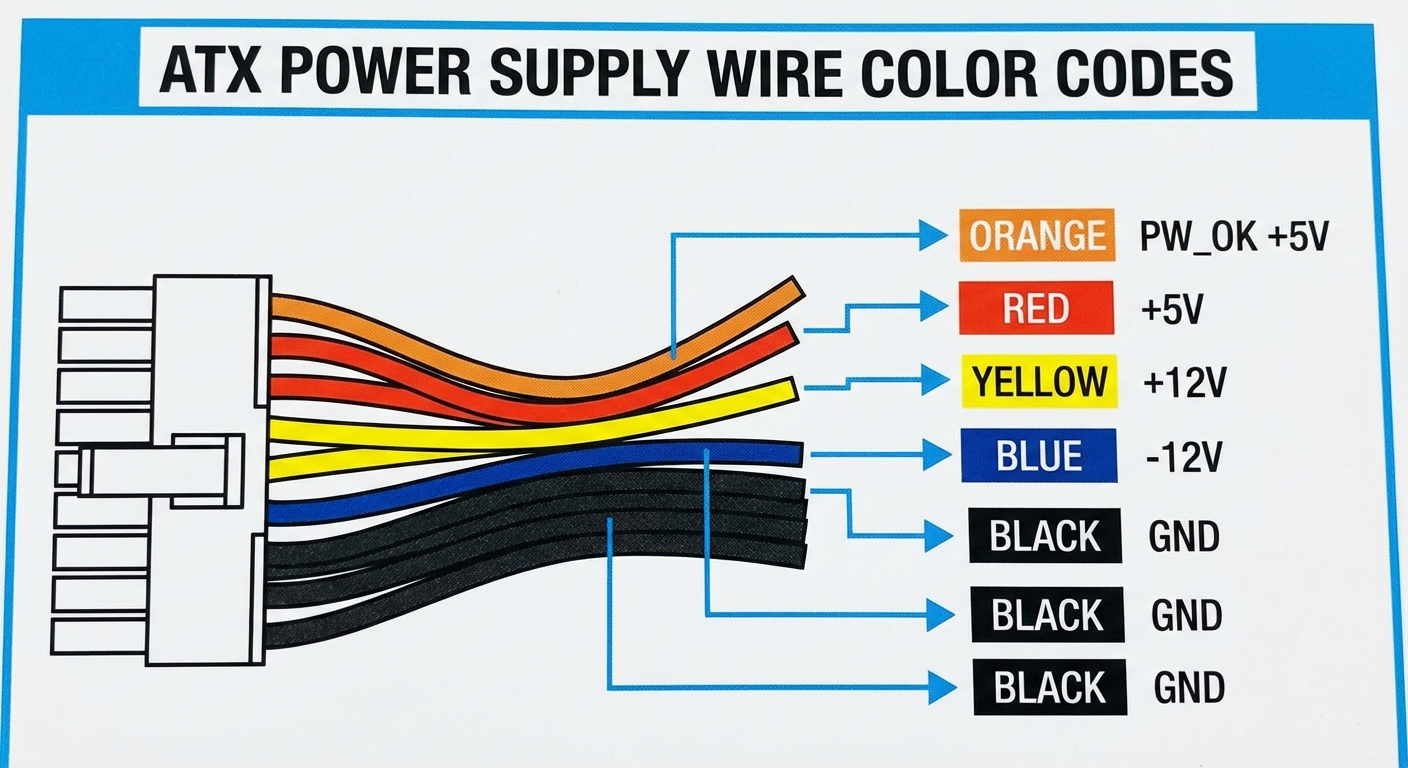
The most commonly used power supply standard in modern PCs is the ATX (Advanced Technology eXtended) specification. Below is a list of the standard wire color codes and their corresponding functions:
| Wire Color | Description |
|---|---|
| Orange | Power Good (PW_OK), indicating that the power supply is functioning correctly. |
| Red | +5 Volts (Vcc), used to power peripherals and internal components. |
| Yellow | +12 Volts, typically used for powering hard drives and motors. |
| Blue | -12 Volts, less commonly used, typically for legacy connections. |
| Black | Ground (GND), serves as the return path for electrical current. |
Additional black wires are often present, representing ground connections.
You may also like




Variations in Power Supply Wiring
While the ATX standard serves as a guideline, variations can occur between different manufacturers or in older models, such as the AT power supply. For example, in some older power supplies, the blue wire may correspond to +12 volts rather than -12 volts. It’s important to check the specifications provided by the manufacturer when in doubt.
Common Connectors and Their Functions
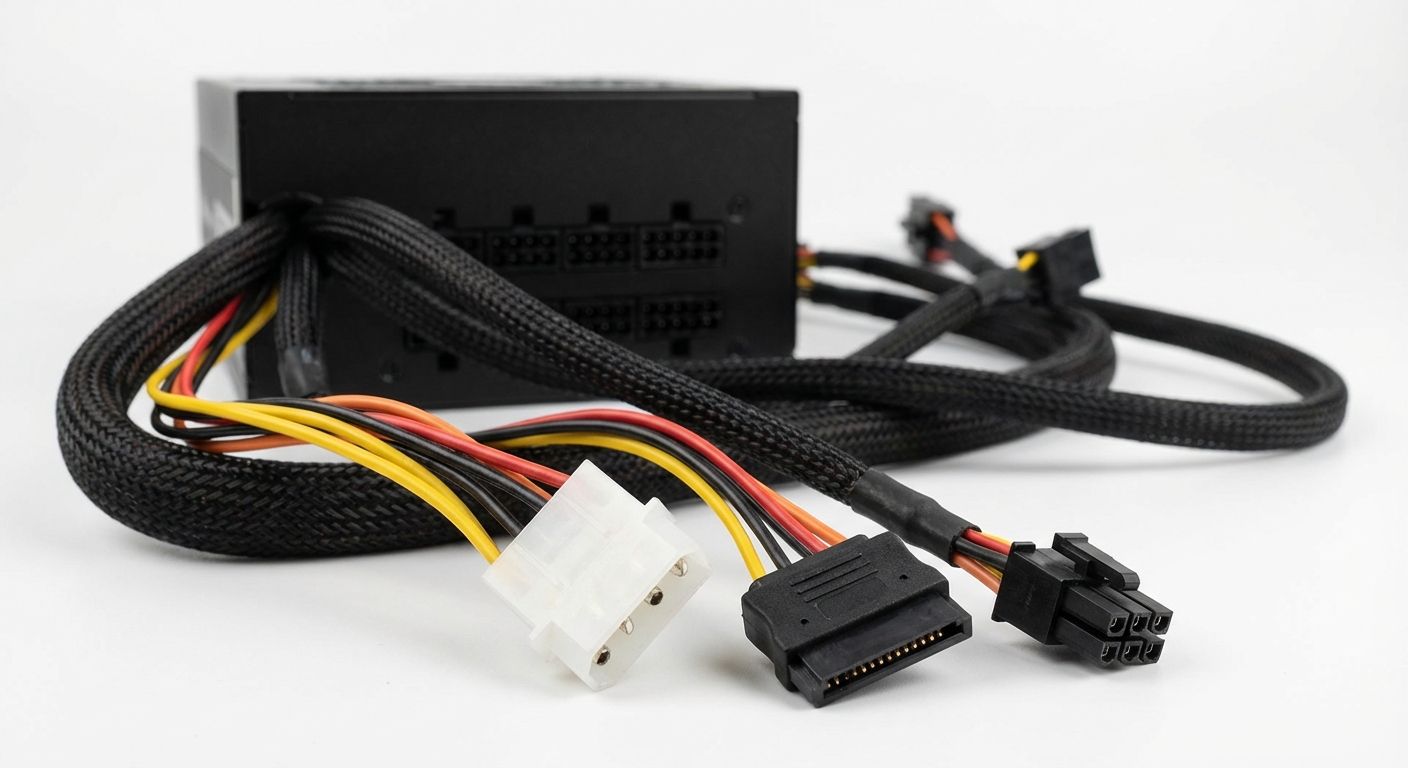
Power supply cables connect to different components of the PC through various connectors. Below are some common connectors and the associated cable colors:
| Connector Type | Wire Colors | Function |
|---|---|---|
| Molex Connector | Yellow (+12V), Red (+5V), Black (GND) | Used primarily for hard drives and optical drives. |
| SATA Connector | Red (+3.3V), Black (GND), Yellow (+12V), Orange (+5V) | Designed for newer hard drives and SSDs. |
| 4-Pin CPU Connector | Yellow (+12V), Black (GND) | Powers the CPU directly. |
How to Safely Read and Interpret Power Supply Color Codes
When working with PC power supplies, safety is paramount. Here are some best practices:
- Turn off and unplug: Before inspecting or modifying any connections, ensure the power supply is turned off and unplugged from the wall.
- Consult documentation: Always refer to the power supply’s manual or technical documentation for specific wiring details from the manufacturer.
- Use a multimeter: If unsure about wire functionality, use a multimeter to test voltage outputs before connecting hardware.
- Keep a record: If customizing or modifying your setup, document connections for future reference.
Frequently Asked Questions
What do the colors of PC power supply wires mean?
The colors correspond to specific voltage levels and functions, such as red for +5 volts and yellow for +12 volts.
Can I use different power supply cable colors from various manufacturers?
While many manufacturers adhere to the ATX standard, it’s essential to verify the wiring color codes as they can vary. Always check the manufacturer’s documentation.
What happens if I connect wires incorrectly?
Connecting wires incorrectly can lead to short circuits, hardware damage, or even pose a fire hazard. Always double-check each connection.
Are power supply wire colors universal?
No, although there is a general standard, not all manufacturer power supplies follow the same color codes. Always consult the specific user manual.
What is the significance of the orange wire in an ATX power supply?
The orange wire typically indicates the Power Good signal, which ensures that all voltage levels are within a correct range before powering the system.
Conclusion
Understanding PC power supply wire color codes is essential for anyone looking to build, upgrade, or troubleshoot their computer systems. Knowing the function of each wire helps in making informed decisions regarding installation and maintenance. For related topics, you may explore the wiring schemes of other electronic devices.
Rotating USB