
Understanding TIA/EIA 598 Fiber Optic Ribbon Color Codes
Fiber optics play a crucial role in today’s high-speed communication networks, providing the backbone for internet, television, and telephony services. Among the key aspects of fiber optic installation and maintenance is the color coding of cables, a system defined by the Telecommunications Industry Association (TIA) in its standard TIA-598-C. This standard helps technicians correctly identify and manage fiber connections, which is vital for effective network performance and troubleshooting. However, misconceptions about these coding schemes often lead to confusion during installation or maintenance. In this article, we will explore the TIA/EIA 598 fiber optic ribbon color codes, clarify their importance, and outline the guidelines for applying them in real-world scenarios.
The Importance of Color Coding in Fiber Optics
Color coding in fiber optics is essential for several reasons:
- Identification: Each color represents a specific fiber, allowing quick and accurate identification during installation and maintenance.
- Organization: Proper color coding helps keep fiber installations organized, reducing the risk of errors.
- Standardization: Compliance with the universal TIA-598-C standard ensures that technicians across the industry can understand each other’s work.
- Efficiency: Clear identification speeds up troubleshooting processes, minimizing downtime.
How TIA/EIA 598-C Works
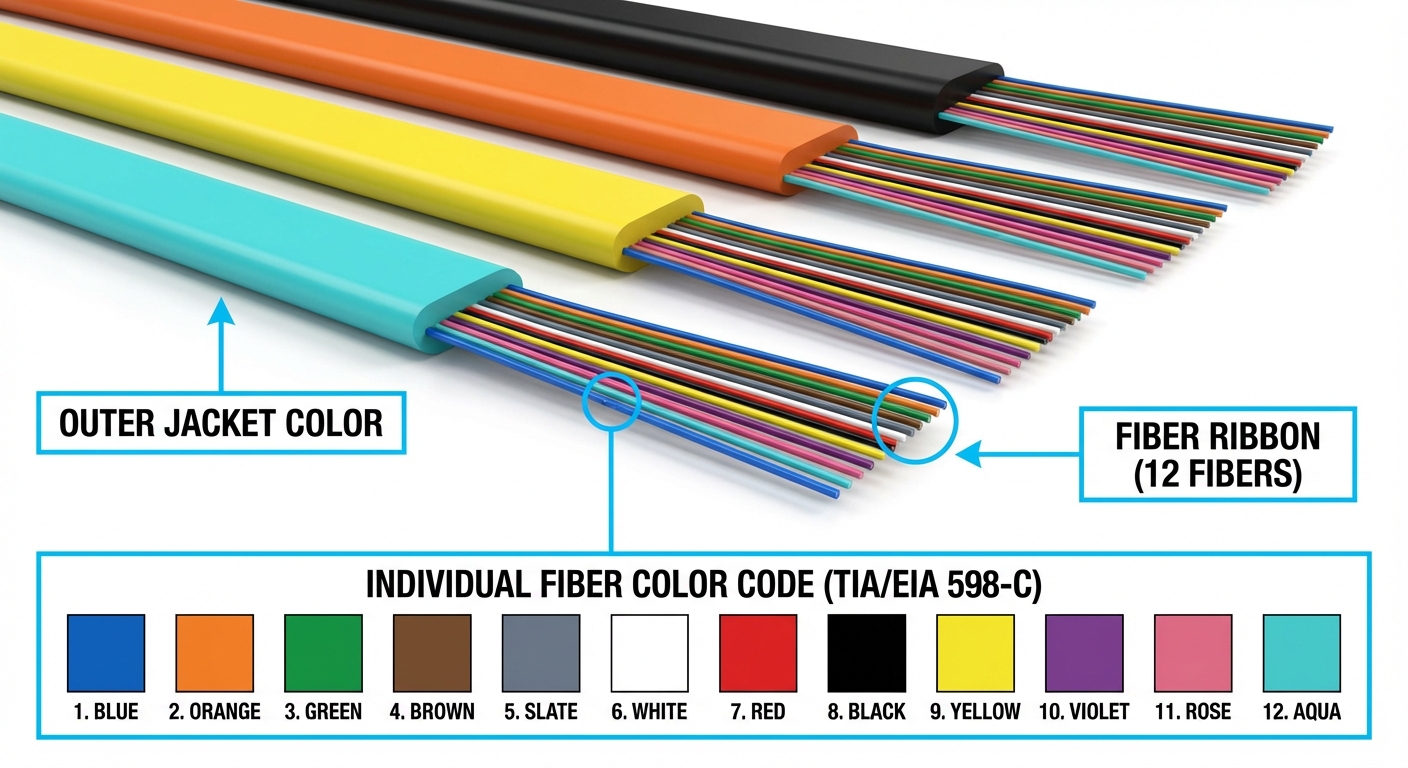
The TIA-598-C standard covers color coding for different fiber types and cables, including ribbon fiber cables and multi-fiber push-on (MPO) cables. Here is how the fiber color coding system is structured:
Outer Jacket Colors
The outer jacket of fiber optic cables is often color-coded to indicate the type of fiber inside. Common jacket colors include:
You may also like


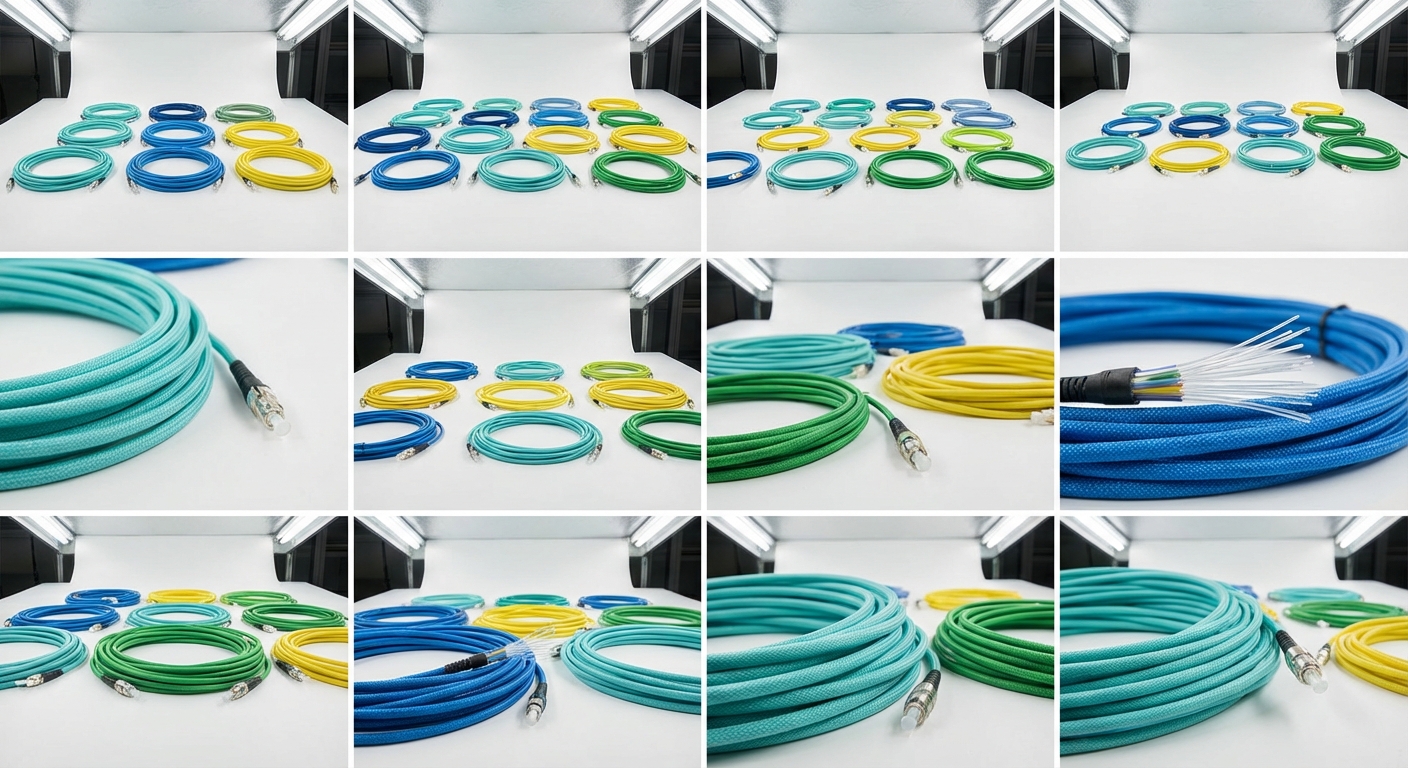
- Aqua (AQ): Used for indoor cables containing laser-optimized 50/125 μm multi-mode optical fiber.
- Blue (BL): Designated for indoor cables with polarization-maintaining fiber.
- Other Colors: Typical colors like yellow, orange, and green are also widely used and must adhere to the standards outlined in TIA-598-C.
Fiber and Buffered Fiber Color Codes
When dealing with individual fibers within cables, each fiber is assigned a specific color for identification purposes. The colors used for this purpose are:
| Color Code | Color |
|---|---|
| 1 | Blue |
| 2 | Orange |
| 3 | Green |
| 4 | Brown |
| 5 | Slate |
| 6 | Brown |
| 7 | White |
| 8 | Red |
| 9 | Black |
| 10 | Yellow |
| 11 | Violet |
| 12 | Pink |
In installations involving more than 12 fibers, these colors are repeated but paired with stripes of black to distinguish them (with the exception of black, which uses yellow stripes). This repetition provides a systematic approach to larger installations without losing clarity.
Best Practices for Using TIA-598-C Color Codes
To successfully implement the TIA-598-C color coding in fiber optic installations and maintenance:
- Always refer to the latest TIA-598 document for the most accurate color coding guidelines.
- Use the correct tools for installation to avoid damaging the fibers.
- Label every connection point clearly, noting the corresponding color codes, to assist in future troubleshooting.
- Conduct regular training sessions for technicians to keep them updated on color coding standards.
Real-World Applications
Color coding according to TIA-598-C has proven effective in various scenarios:
- In data centers, fiber cables can quickly become entangled; color coding simplifies the identification of connections, making troubleshooting straightforward.
- During network expansions, technicians can easily integrate new fibers into existing systems without confusion.
- When performing routine maintenance, technicians can rely on standardized color coding to locate and address issues rapidly.
Common Misconceptions
Many individuals assume that any color can be used for fiber optics as long as the wires are functional. This misconception can lead to organizational chaos, making it difficult to troubleshoot or expand networks effectively. Abiding by the TIA-598-C standard ensures consistency and clarity, which can save time and money in the long run.
Frequently Asked Questions
Q: What is TIA-598-C?
A: TIA-598-C is the Telecommunications Industry Association’s standard for color coding optical fiber cables, providing guidelines for color use in fiber installations.
Q: Why is color coding important in fiber optics?
A: Color coding simplifies identification, organization, and troubleshooting of fiber optic connections, crucial for maintaining effective communication networks.
Q: Are there specific colors assigned to fiber types?
A: Yes, specific colors are designated for fibers according to TIA-598-C, ensuring consistency and ease of identification.
Q: What happens if I don’t follow the color coding standards?
A: Not following the standards can lead to confusion, errors during maintenance, and complications in troubleshooting issues within the network.
Q: Can I use any other colors apart from those defined in TIA-598-C?
A: It is encouraged to adhere strictly to TIA-598-C colors for fiber optics to ensure clarity and standardization in identification.
Conclusion
Understanding and applying the TIA-598-C fiber optic ribbon color codes is critical for effective network management. By adhering to these standards, professionals can ensure their installations and maintenance practices are efficient, organized, and troubleshoot-ready. For those involved in fiber optics, staying informed about updates in color coding and standards continues to be essential for operational success.
Related topics include fiber optic cable installation techniques, network management practices, and troubleshooting fiber optic systems.
Rotating USB