Introduction
In the rapidly evolving world of telecommunications, understanding the differences between single mode and multimode fiber optics has become essential for professionals in the field. This article addresses the question: What are the color codes associated with single mode and multimode fiber cables, and what do they signify? With the increasing complexity of fiber optic installations, recognizing these color codes not only helps in easier identification of cables but also ensures proper installation and connectivity, ultimately affecting performance. A common misconception is that the color of the fiber’s outer jacket reflects its capabilities, which can lead to mistakes in choosing the right type of fiber for specific applications. By the end of this article, you will gain a clearer understanding of the color codes, the significance of those colors, and the practical differences between single mode and multimode fibers.
Single Mode vs. Multimode Fiber: A Technical Overview
To understand fiber optic color codes, it is crucial to first grasp the basic concepts behind single mode and multimode fiber optic cables.
Fiber Optic Basics
Fiber optic cables are composed of glass or plastic fibers that transmit data as light signals. The core of the cable plays a vital role in determining how this data is transmitted. Here are the fundamental differences:
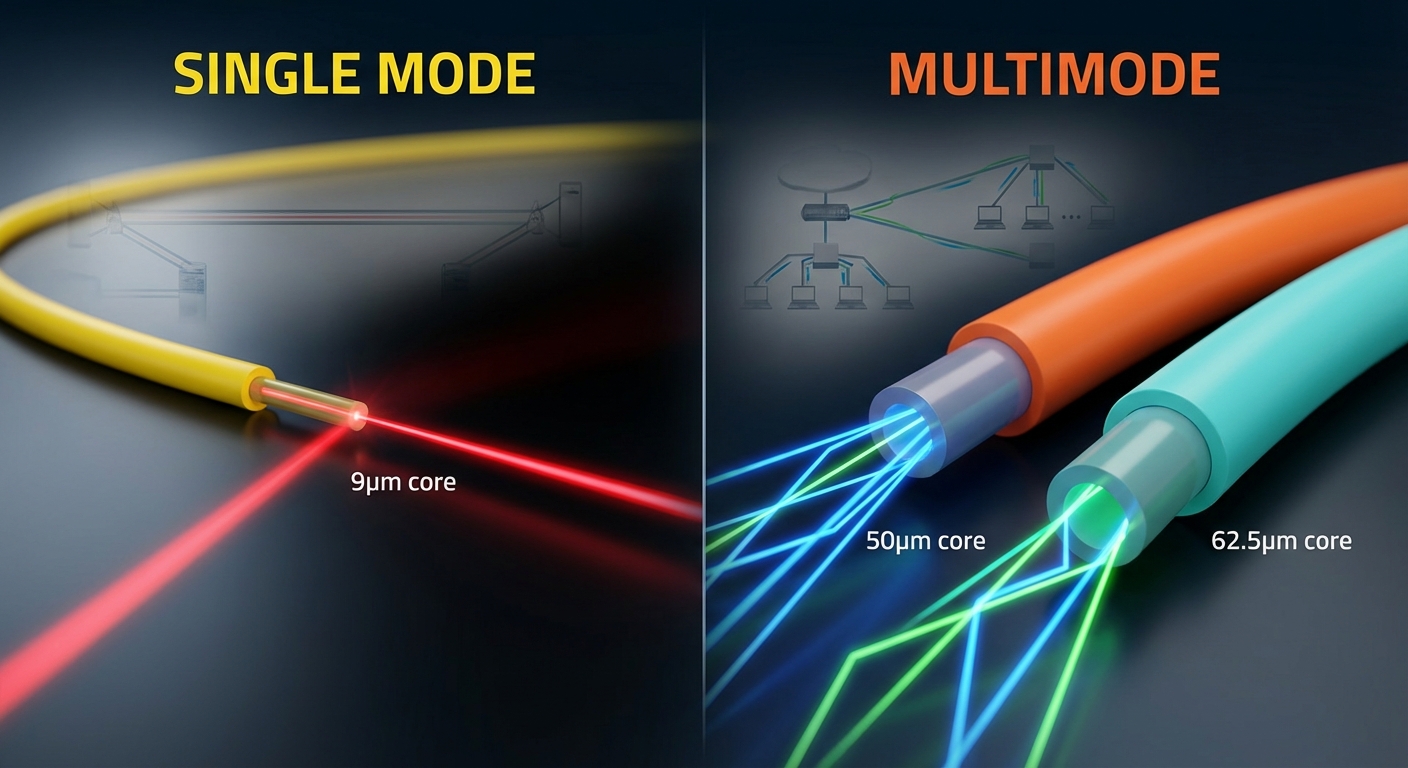
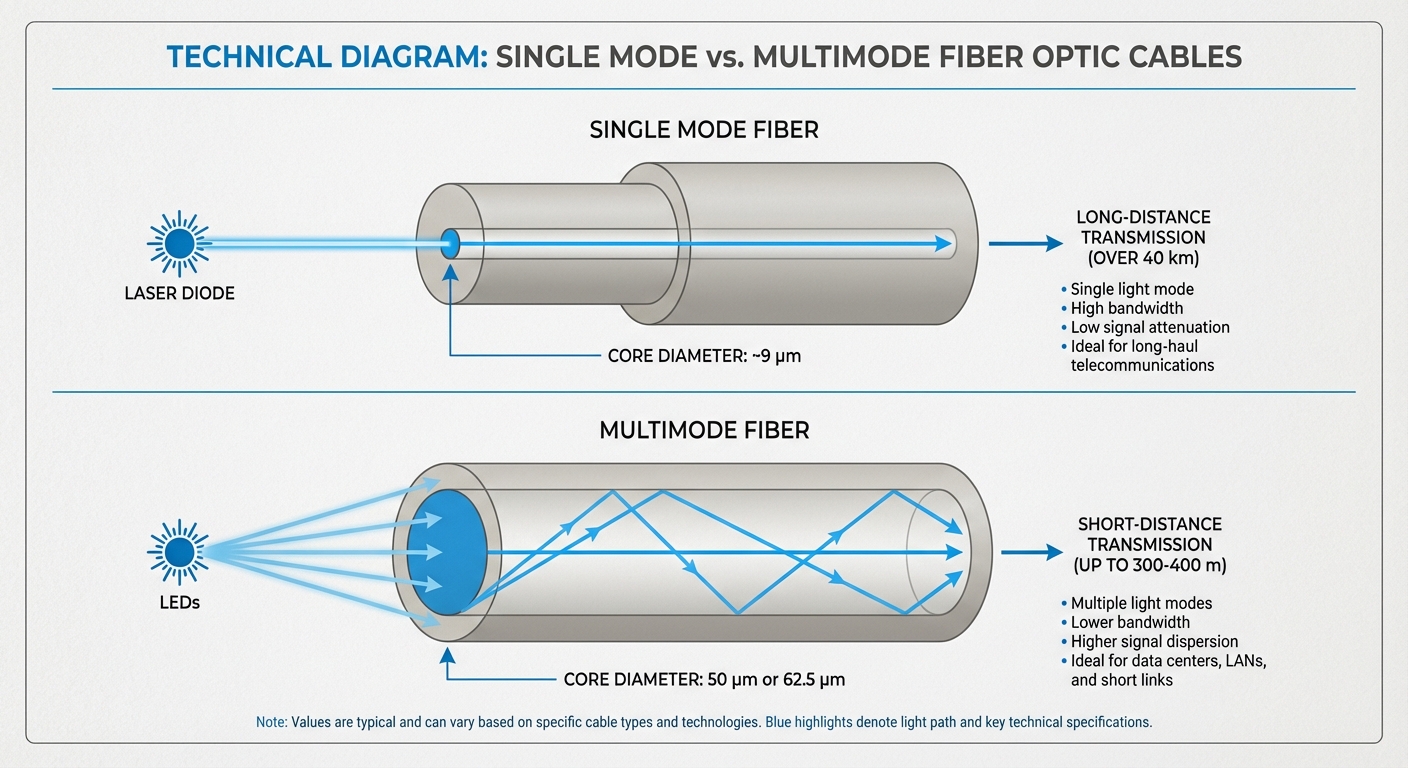
- Single Mode Fiber: Features a narrow core diameter of 9 microns, allowing a single light mode to propagate. This design is optimized for long-distance communication and minimizes signal loss.
- Multimode Fiber: Offers a wider core, generally of 50 or 62.5 microns, enabling multiple light modes to travel simultaneously. This is particularly useful for short-distance communication within buildings or campuses.
Color Coding Explained
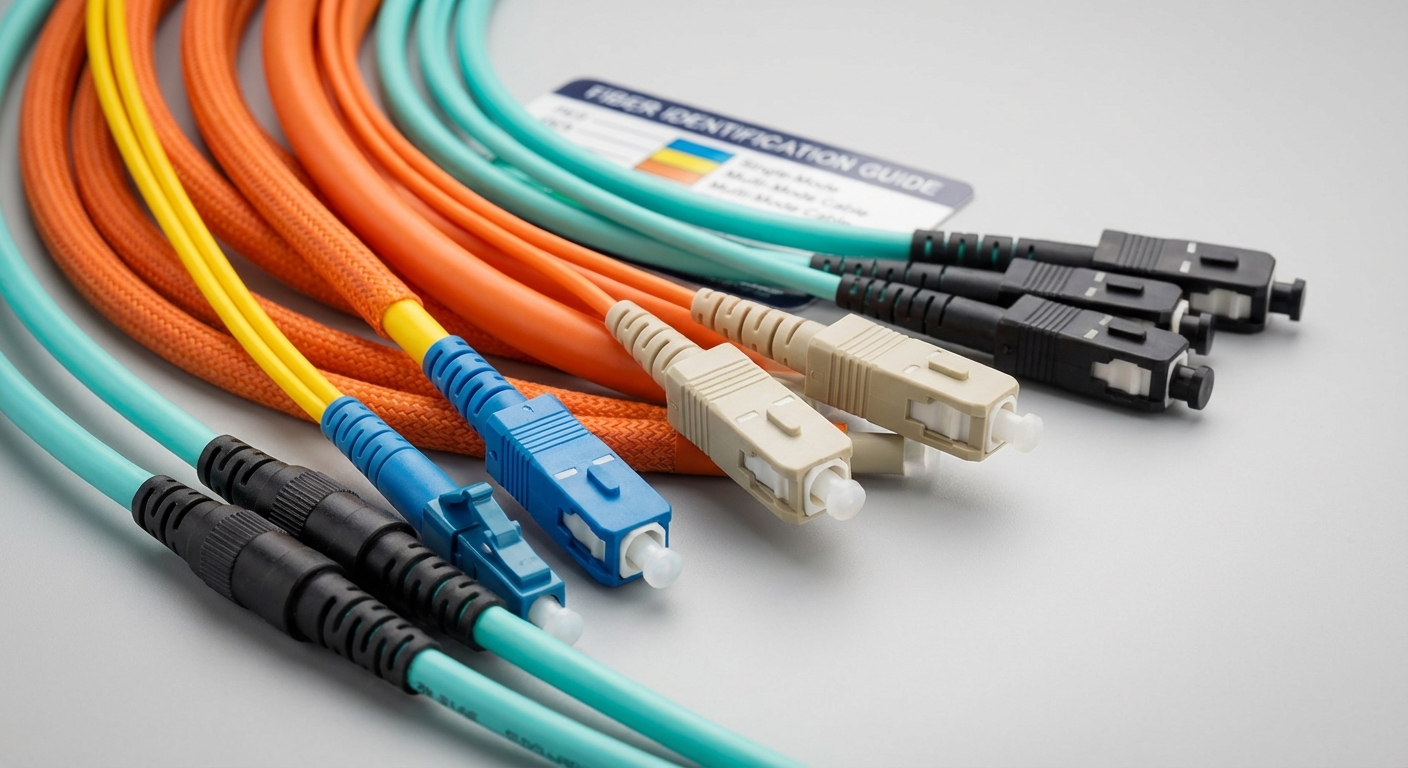
Color standards play an integral part in distinguishing between fiber types and are essential for technicians working with installations. Below is a concise summary of the standard color codes:
You may also like




| Type of Fiber | Typical Jacket Color | Core Diameter |
|---|---|---|
| Single Mode | Yellow | 9/125 microns |
| Multimode (OM1) | Orange | 62.5/125 microns |
| Multimode (OM2) | Orange | 50/125 microns |
| Multimode (OM3) | Aqua | 50/125 microns |
| Multimode (OM4) | Aqua | 50/125 microns |
Detailed Features and Specifications
Single Mode Fiber
Single mode fiber is designed to carry high-speed data over long distances, typically favored by telecommunications companies. Its features include:
- Laser Light Source: Uses lasers to transmit light, allowing for high bandwidth capacity and minimal loss.
- Long-Distance Capability: Can transmit signals for over 40 kilometers without significant degradation.
- Applications: Commonly used in cable television, internet service providers, and long-distance telecommunication systems.
Multimode Fiber
Conversely, multimode fiber supports multiple light modes due to its wider core, making it suitable for shorter distances. Key features include:
- Light Sources: Typically utilizes LEDs, which are less expensive but also lead to higher dispersion, affecting the signal over long distances.
- Distance Limitations: Effective for distances up to 300 meters with OM3 and about 400 meters with OM4.
- Applications: Ideal for local area networks (LANs), data centers, and multimedia integration within buildings.
Why Color Codes Matter
Understanding fiber optic color codes isn’t merely about identifying cable types; it is essential for ensuring the integrity of data transmission networks. When installing or troubleshooting these systems, technicians can:
- Easily identify the type of fiber cable being used.
- Prevent misconfigurations and the potential for data loss.
- Improve installation efficiency and reduce the time required for maintenance.
Common Misconceptions about Fiber Color Codes
There are several misconceptions that technicians might encounter regarding fiber optic color codes, including:
- All Yellow Cables are High Speed: While yellow jackets generally indicate single mode fiber, not all single mode cables perform equally.
- Multimode Fiber Is Always Faster Than Single Mode: The speed of the connection depends more on the network design, distance, and equipment than the fiber type alone.
FAQ
Q1: What is the key difference between single mode and multimode fibers?
A1: The main difference lies in the core diameter and the number of light modes they can carry; single mode has a 9-micron core for long-distance communication, while multimode typically has 50 or 62.5-micron cores for shorter distances.
Q2: Why are fiber colors standardized?
A2: Standardization simplifies identification, reduces installation errors, and enhances maintenance across different networks.
Q3: Can I use a multimode cable for long distances?
A3: It is not advisable, as multimode fibers are typically limited to shorter distances compared to single mode fibers due to higher signal attenuation.
Q4: Is the performance of multimode fiber dependent on the type of light source?
A4: Yes, the performance varies based on whether it uses LEDs or lasers, with lasers providing higher data rates over longer distances.
Q5: How can I identify which fiber type I have on-site?
A5: Check the jacket color; yellow indicates single mode while orange or aqua signifies multimode. You could also verify through documentation or manufacturer specifications.
Conclusion
In summary, understanding the characteristics and color codes of single mode and multimode fibers is essential for anyone involved in fiber optic installations and maintenance. This knowledge not only aids in selecting the appropriate cable for specific applications but ensures efficient and effective data transmission. Beyond cable selection, these insights pave the way for successful troubleshooting and network management. For further reading on fiber optics, consider exploring articles on Wikipedia’s Fiber Optic Communication or manufacturer resources like those from Black Box.