Introduction
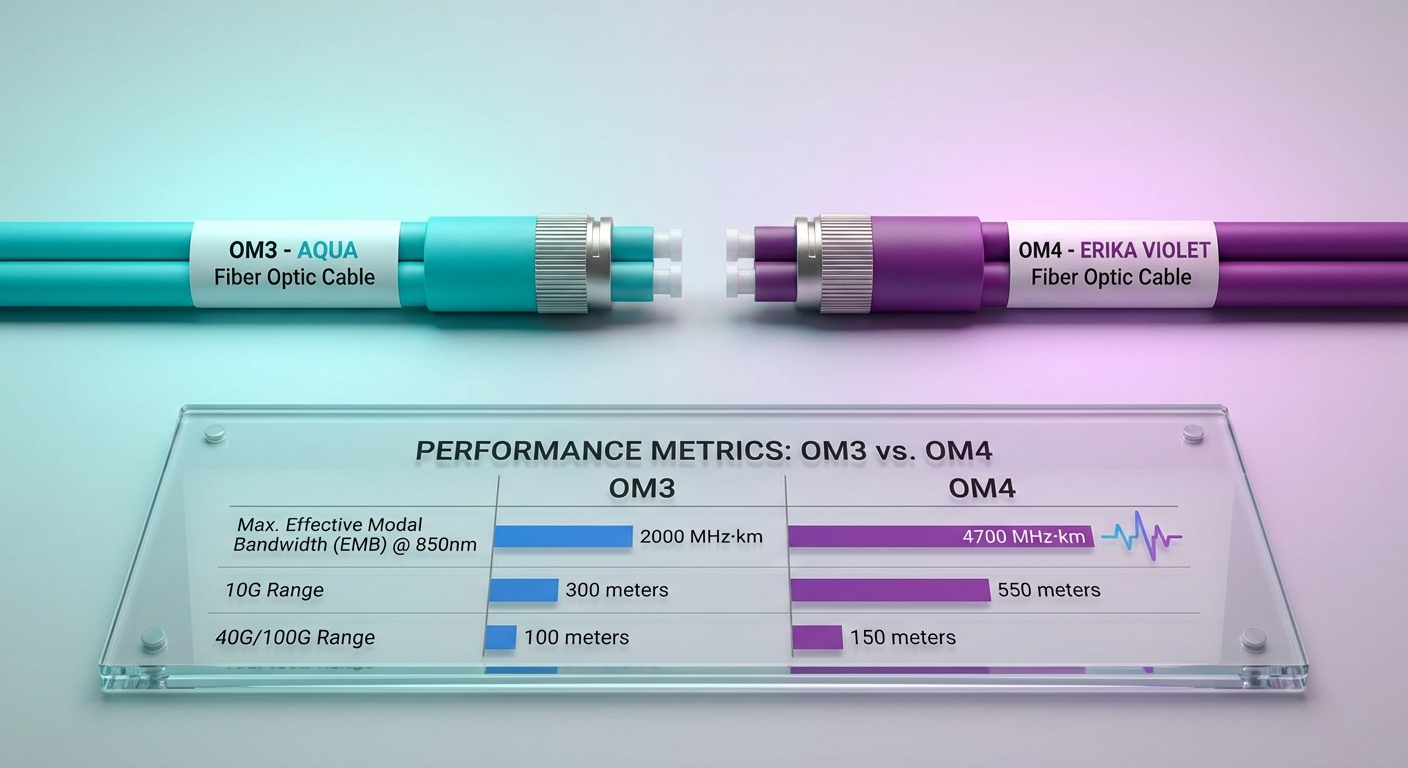
In the world of fiber optics, color coding serves as an essential means of identifying different types of cables, particularly in multimode fibers such as OM3 and OM4. This article addresses a common question: What are the jacket color codes for OM3 and OM4 fiber optic cables? Understanding these distinctions is critical for anyone involved in networking, telecommunications, or data center management, as using the incorrect cable type can lead to performance issues and connectivity problems. One common misconception is that OM3 and OM4 fiber cables are the same, which overlooks their performance differences and the significance of their color codes. By the end of this article, you will have a clearer understanding of the color codes associated with OM3 and OM4 fiber, their differences, and the practical implications of selecting the correct type for your applications.
Understanding Fiber Optic Cables
Fiber optic cables transmit data as pulses of light through thin strands of glass or plastic. These cables are categorized into different types based on their core size, light transmission characteristics, and bandwidth capabilities. Multimode fibers, specifically, are designed for short-distance data transmission and are commonly used in local area networks (LAN) and data centers.
Color Codes for Multimode Fiber
Each type of multimode fiber optic cable is associated with a specific jacket color that facilitates easy identification. Here’s a concise overview of the common color codes:
- OM1: Orange jacket
- OM2: Orange or grey jacket
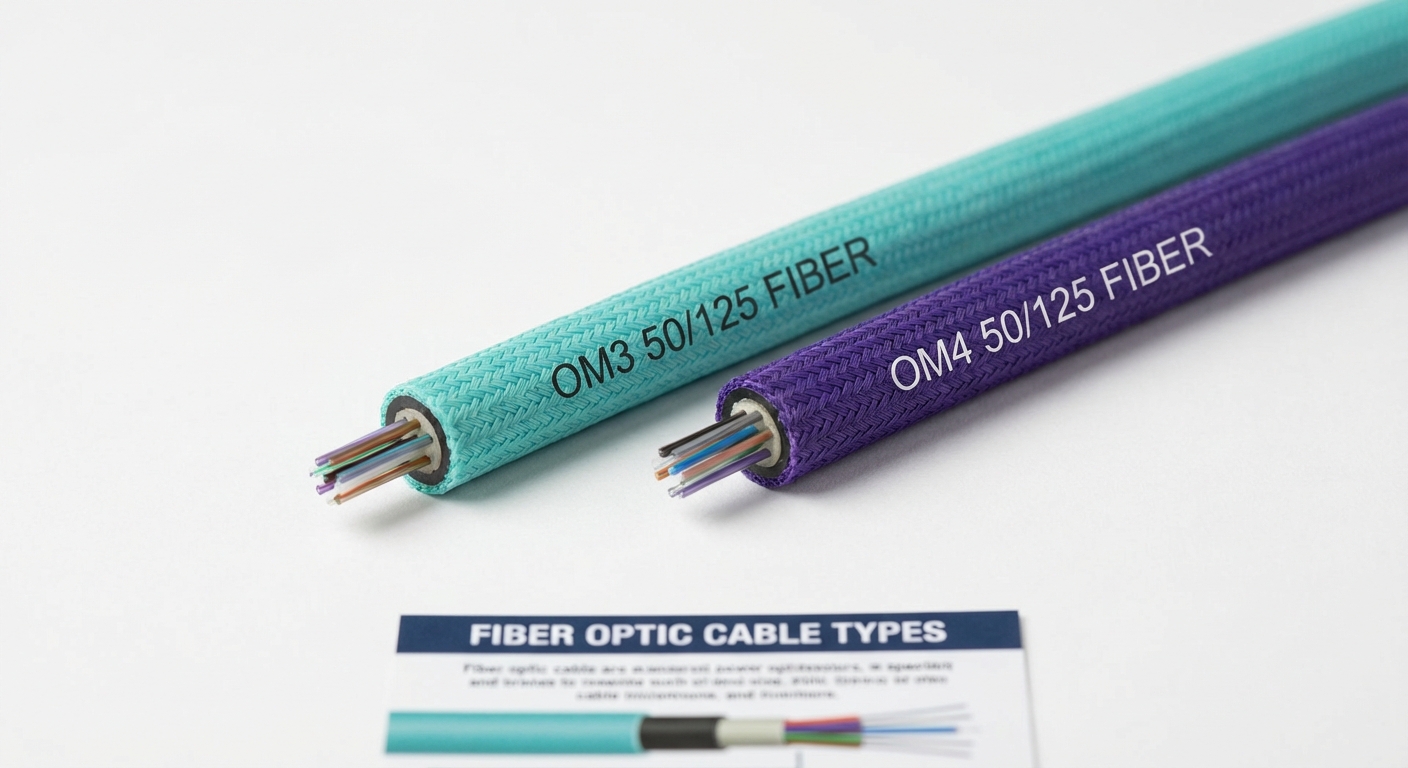
- OM3: Aqua jacket
- OM4: Erika Violet jacket
These color codes not only help in identifying the type of fiber but also indicate the bandwidth and performance capabilities of each cable.
You may also like


Comparing OM3 and OM4 Fiber
While OM3 and OM4 fibers share the same optical fiber technology, they differ in terms of performance and jacket color. This comparison can help in understanding when to use each type of cable.
Performance Differences
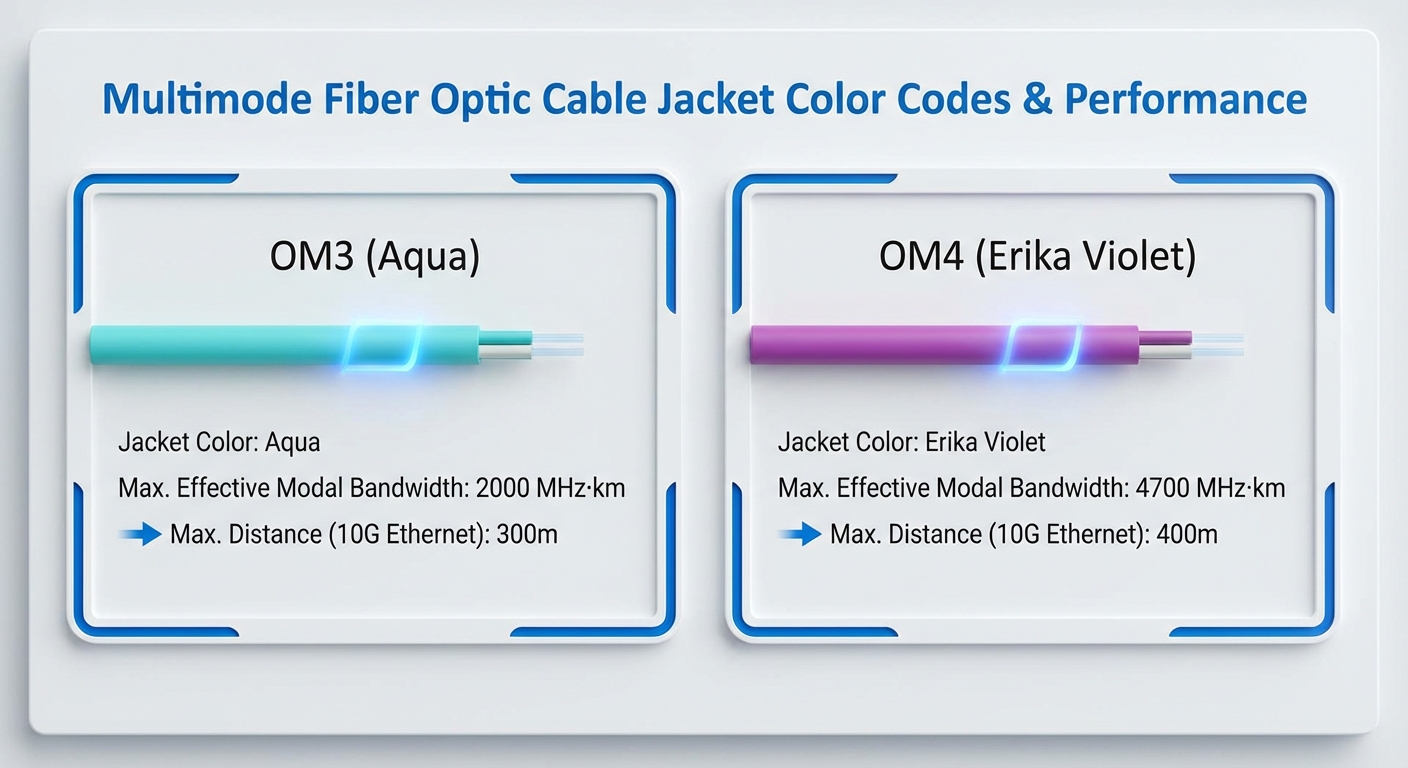
OM3 and OM4 fibers are both optimized for multimode applications, but OM4 provides enhanced bandwidth capabilities. Below are the main specifications:
| Fiber Type | Jacket Color | Maximum Effective Modal Bandwidth (EMB) | Distance for 10G Ethernet |
|---|---|---|---|
| OM3 | Aqua | 2000 MHz·km | 300 meters |
| OM4 | Erika Violet | 4700 MHz·km | 400 meters |
Applications and Use Cases
Due to their distinct characteristics, OM3 and OM4 cables find applications in different scenarios:
- OM3: Ideal for 10 Gbps Ethernet connections within data centers and short-distance networking tasks.
- OM4: Suitable for higher bandwidth applications, supporting up to 100 Gbps Ethernet over longer distances, making it a better choice for future-proof installations.
Common Confusions and Misconceptions
Many users might assume that the jacket color is merely aesthetic, but it’s crucial for ensuring compatibility and performance. Additionally, the fact that OM3 and OM4 use similar colors can lead to oversight. It’s vital to pay attention to jacket color when selecting fiber optic cables to avoid potential network issues.
Frequently Asked Questions
Q: What color is the OM3 fiber optic cable?
A: The OM3 fiber optic cable is typically jacketed in aqua.
Q: What is the jacket color for OM4 fiber optic cables?
A: OM4 fiber cables are jacketed in Erika Violet.
Q: Can I use OM3 cables in place of OM4 for high-bandwidth applications?
A: While OM3 can be used for some high-bandwidth applications, it may not meet the requirements for longer distances and higher speeds like OM4 can.
Q: Are OM3 and OM4 interchangeable?
A: They are not interchangeable as they have different performance characteristics, which can impact network reliability and efficiency.
Q: Why is the color coding important in fiber optics?
A: Color coding helps technicians easily identify the cable type, ensuring that the correct fiber is used for specific applications to prevent performance issues.
Conclusion
In summary, understanding the jacket color codes for OM3 and OM4 fiber optic cables is vital for selecting the appropriate type to meet specific network demands. The aqua jacket of OM3 and the Erika Violet jacket of OM4 not only denote their respective standards but also signify their performance capabilities. As technology evolves, awareness of these distinctions will help ensure efficient data transmission and network reliability.
For more information on fiber optics, you might want to explore related topics such as single-mode fiber or fiber connector types.
Rotating USB