Introduction
In the rapidly evolving landscape of quantum computing, Google’s Willow chip stands as a significant landmark, marking a pivotal moment in the race toward building practical quantum systems. This article seeks to address the critical question: what does Willow’s development mean for the future of quantum computing? As researchers and technologists strive to harness the potential of qubits, Willow’s innovative approach to error correction showcases both advancements and the ongoing challenges in the field. This matters because quantum computers have the potential to revolutionize industries by performing calculations beyond the reach of classical computers. A common misconception is that quantum computing is a fully realized technology; however, practical applications are still on the horizon. Readers will learn about Willow’s design, performance improvements, and how it promotes scalable quantum computing—navigating the complexities of qubit error correction and what this signifies for the future.
Understanding Willow: A New Era in Quantum Chip Design
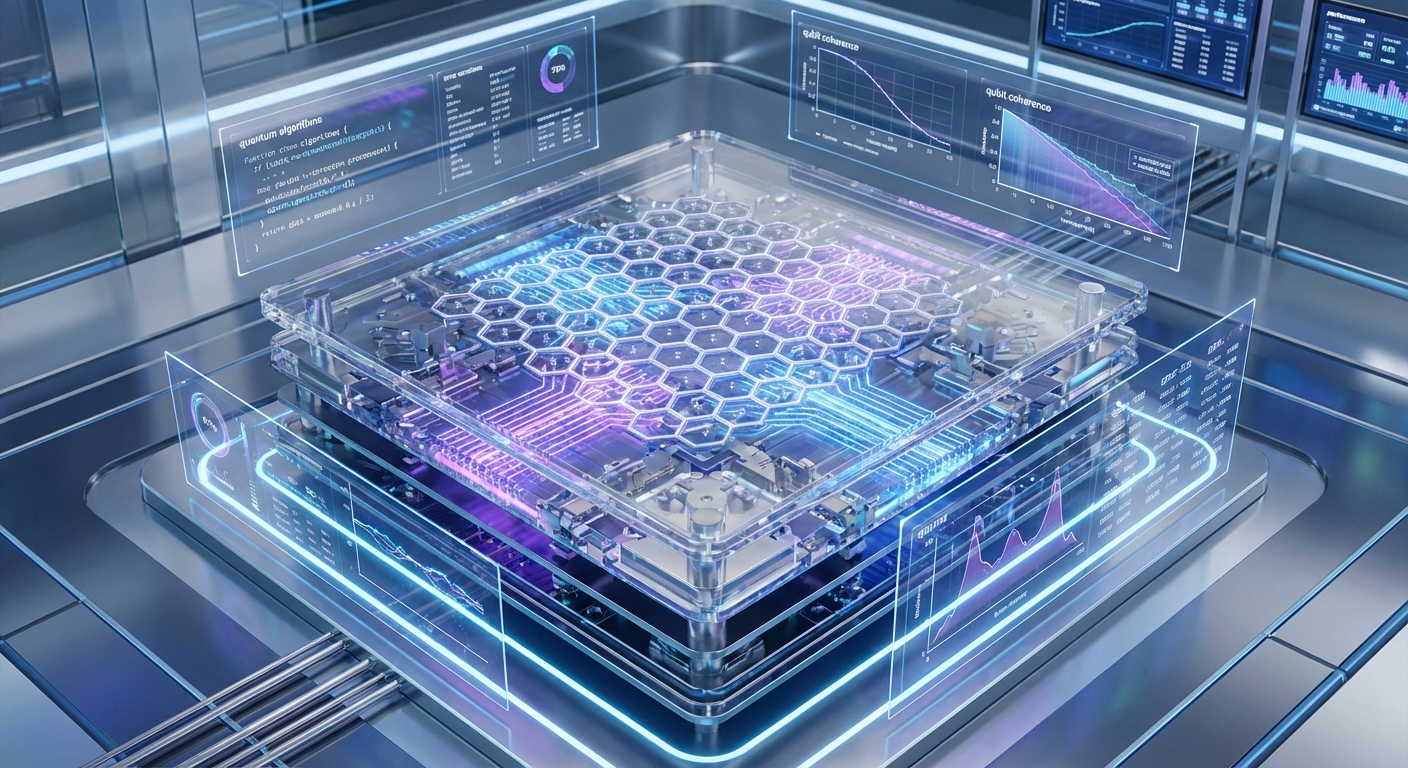
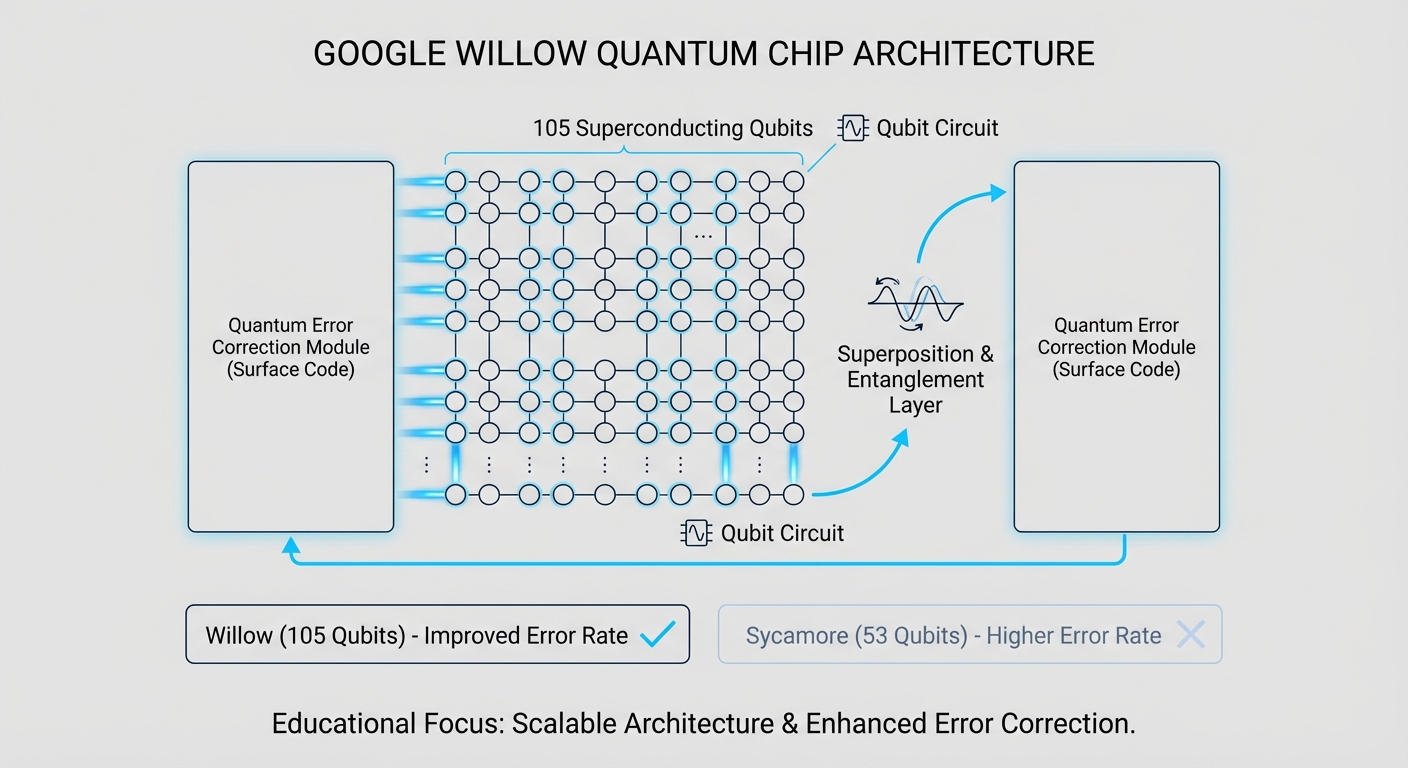
Google’s Willow chip, launched in late 2024, is the latest in a series of quantum processors developed by Google Quantum AI. It features a groundbreaking architecture that utilizes 105 superconducting qubits, effectively doubling the qubit count of its predecessor, the Sycamore chip.
How Willow Operates
Willow operates by employing superconducting circuits to create qubits that can exist simultaneously in multiple states, a principle known as superposition. This enables quantum computers to solve certain problems much more efficiently than classical computers.
One of Willow’s standout features is its error correction capabilities—crucial for practical quantum computing. Unlike classical bits that are either 0 or 1, qubits can experience various states that could lead to errors in computation. Willow’s design aims to minimize these errors through scalable error correction, allowing it to operate below the crucial error threshold necessary for reliable computations.
You may also like




Milestones Achieved with Willow
Willow’s achievements are substantial and worth highlighting:
- Exponential Error Reduction: For the first time, Willow demonstrated an exponential reduction in error rates as more qubits are added, addressing a significant challenge in quantum computing.
- Random Circuit Sampling Benchmark: Willow excelled in the same random circuit sampling benchmark that demonstrated Sycamore’s quantum supremacy in 2019. This milestone showcased Willow’s superior performance, indicating a robust leap forward in quantum capabilities.
- Practical Applications on the Horizon: With improved error correction, Willow is positioned as a step toward realizing quantum computers with practical uses, offering the potential for advancements across various fields, including cryptography, materials science, and complex simulations.
A Closer Look at Error Correction
Error correction is essential in quantum computing due to the fragile nature of qubits. Where classical computers can rely on redundancy to correct errors, quantum systems face unique challenges due to entanglement and superposition. Willow’s ability to function below the quantum error correction threshold is pivotal.
Key Innovations in Error Correction
- Scalability: Willow’s architecture allows for error rates to drop as the number of qubits scales. This exploration into scalable error correction may potentially lead to fault-tolerant quantum systems.
- Benchmarked Performance: Successful benchmarking against classical systems reaffirms Willow’s role in confirming the practicality of quantum computations, paving the way for further innovation.
Comparative Analysis: Willow vs. Previous Chips
| Chip Name | Qubit Count | Key Features | Error Correction Approach |
|---|---|---|---|
| Bristlecone | 72 | Initial development and testing | Basic error correction strategies |
| Sycamore | 53 | Quantum supremacy claimed | Enhanced error correction |
| Willow | 105 | Exponential error reduction, improved benchmarks | Advanced scalable error correction |
Future Outlook of Quantum Computing
The landscape of quantum computing is shifting dramatically, with technologies like Willow paving the way for large-scale quantum systems. While challenges remain, particularly in terms of scaling qubits up to millions for practical applications, the advancements made by Willow signal a more robust future.
Potential Future Applications
- Improving pharmaceuticals through complex molecular simulations.
- Revolutionizing cryptography by enabling secure communication methods.
- Enhancing machine learning algorithms through faster processing capabilities.
FAQ
Q: What is the main innovation of Google’s Willow chip?
A: Willow’s primary innovation lies in its scalable error correction mechanism, which allows for a significant reduction in error rates as the number of qubits increases.
Q: How does Willow compare to its predecessor, Sycamore?
A: Willow has 105 qubits compared to Sycamore’s 53, and it achieves better performance in quantum error correction and random circuit sampling benchmarks.
Q: What are the practical implications of Willow’s advancements?
A: Willow’s advancements bring quantum computing closer to realizing practical applications, such as in pharmaceuticals and cryptography.
Q: Why is error correction so crucial in quantum computing?
A: Error correction is vital because the fragile nature of qubits makes them susceptible to errors during calculations, which can propagate and corrupt results.
Q: What is the significance of exponential error reduction?
A: Exponential error reduction signifies that as more qubits are added, the error rates decrease rapidly, which is essential for building reliable quantum computers.
Conclusion
In summary, Google’s Willow quantum chip embodies a significant advancement in the quest for practical quantum computing, showcasing innovations in error correction and qubit scalability. As the quantum landscape evolves, technologies like Willow will be at the forefront, presenting opportunities for various applications and industries. Related topics include other advancements in superconducting qubit design and their implications for future computing paradigms.